Ridge cap pointing is the mortar seal that stops water getting under your roof tiles, and when it cracks, rain follows.
Most homeowners across the Central Coast and Newcastle only notice their pointing when a chunk falls into the gutter or a brown stain appears on the ceiling. By that stage the damage trail is already well underway, from ridge line down through the sarking and into the timber frame.
This guide covers how pointing works, what to look for, and the difference between a simple repoint and a full rebedding job so you know what you are paying for.
Already spotting cracked mortar or loose ridge caps? All Pro Roof Restoration offers free roof assessments across the Central Coast, Newcastle, Lake Macquarie, Hunter Valley and Port Stephens.
What Roof Pointing Actually Does
On a tiled roof, ridge caps run along the peak and hips where two roof planes meet. The bedding mortar underneath physically secures each cap tile. Pointing sits on top of that bedding, typically 3 to 5 mm thick, and seals the joint between cap and field tiles.
- Bedding holds the ridge cap in position (structural)
- Pointing seals the gap between the cap and surrounding tiles (weatherproofing)
- Modern pointing uses flexible acrylic or silicone-sand compounds that move with thermal expansion instead of cracking like old cement
When the pointing is intact, rainwater runs off the ridge line and into the gutter. When it fails, water wicks underneath the cap and into the roof cavity.
How Pointing Breaks Down on Coastal Roofs
Pointing does not last forever, and roofs along the NSW coast cop a harder run than most. Salt air corrodes the compound, and the swing between a 40-degree summer day and a cold winter night causes repeated expansion that cracks rigid mortar.
Older homes with original cement pointing are the worst affected. Rigid cement cannot flex as tiles expand in the heat and contract overnight, so it cracks within 10 to 15 years. Even modern flexible compounds degrade under UV and coastal conditions.
Here are the signs that your pointing needs attention.
- Visible cracks along the ridge line where pointing has separated from the cap or tiles
- Mortar chunks in the gutter or on the ground around the house after wind or rain
- Ridge caps that rock or shift when touched, meaning the bedding underneath has also started to fail
- Water stains on the ceiling below the ridge, particularly after heavy rain from a specific direction
- Moss or lichen growing in the joints, which traps moisture against the mortar and speeds up deterioration
If your roof is over 15 years old and has the original cement pointing, it is almost certainly due for inspection. David from All Pro Roof Restoration regularly sees Central Coast homes where pointing has completely separated but nobody knew until a leak appeared.
Pointing Repair vs Full Rebedding
This catches most homeowners off guard. You call about cracked pointing, and the roofer tells you the bedding needs replacing too.
Understanding the difference saves you from paying for work you do not need, or paying for a repoint on top of failed bedding that cracks again within months.
| Scenario | What you need | Why |
|---|---|---|
| Pointing cracked but ridge caps are firm and level | Repoint only | The bedding underneath is still sound. Old pointing is scraped off and new flexible compound is applied. |
| Caps are loose, rocking, or sitting unevenly | Full rebedding + repoint | The sand-cement bed has failed. Caps must be lifted, old bedding removed, new bedding laid, then repointed on top. |
| A few caps have shifted but most are solid | Spot rebedding + full repoint | Only the affected caps need rebedding. The rest get new pointing over existing bedding. |
| Cement pointing on a roof over 20 years old | Full rebedding + repoint | If the cement pointing has failed after 20 years, the bedding has almost certainly deteriorated too. |
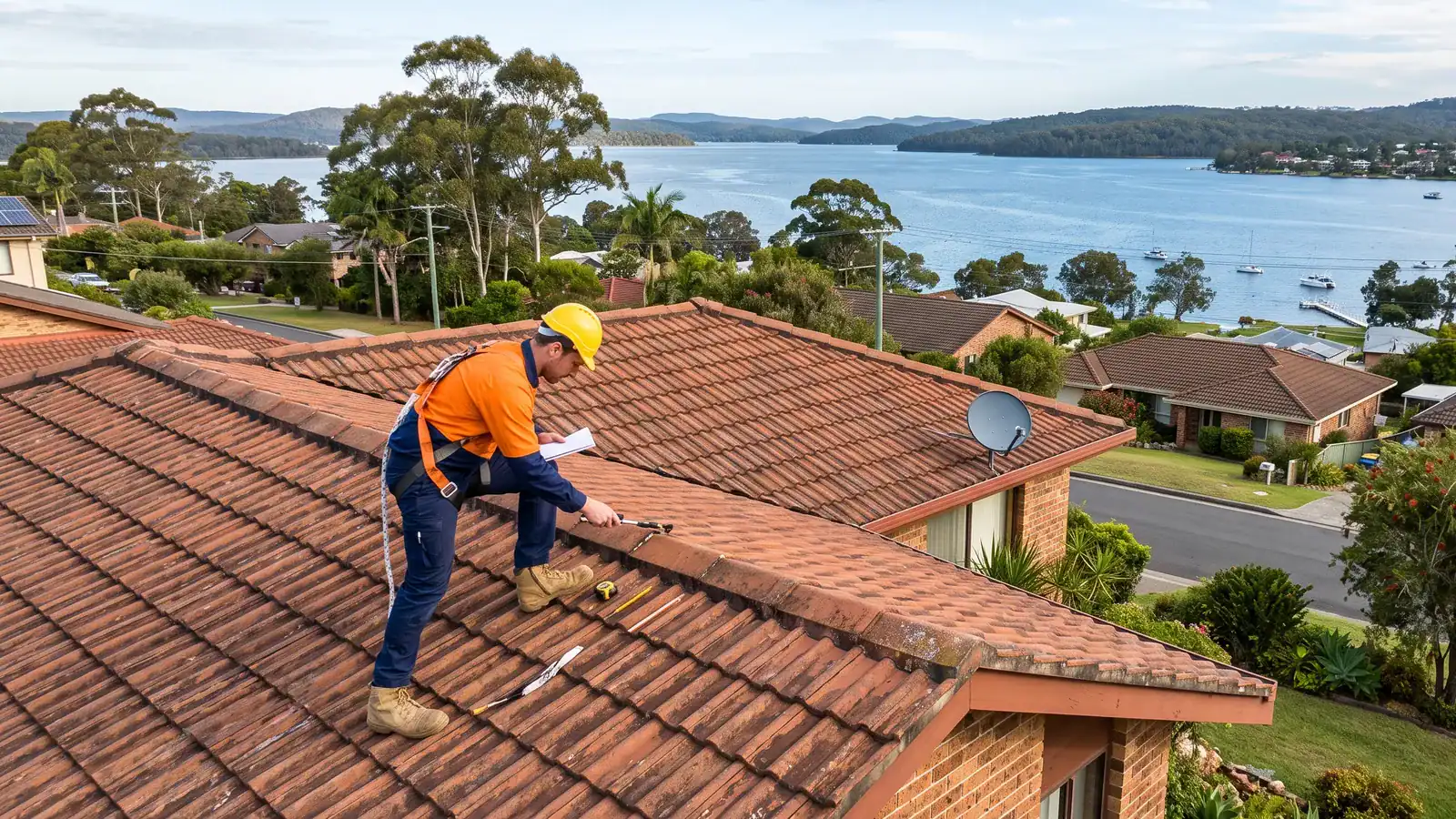
A licensed roofer (All Pro holds NSW licence 178790c) can tell the difference in minutes by pressing on each ridge cap. If the cap shifts, the bedding is gone. If it is rock-solid but the pointing is cracked, a repoint alone will fix the problem.
Not sure which you need? A professional roof repair inspection takes about 30 minutes and gives you a clear answer before any work starts.
What Happens During a Professional Repoint
A proper repoint is not a quick caulking job. Here is what it involves.
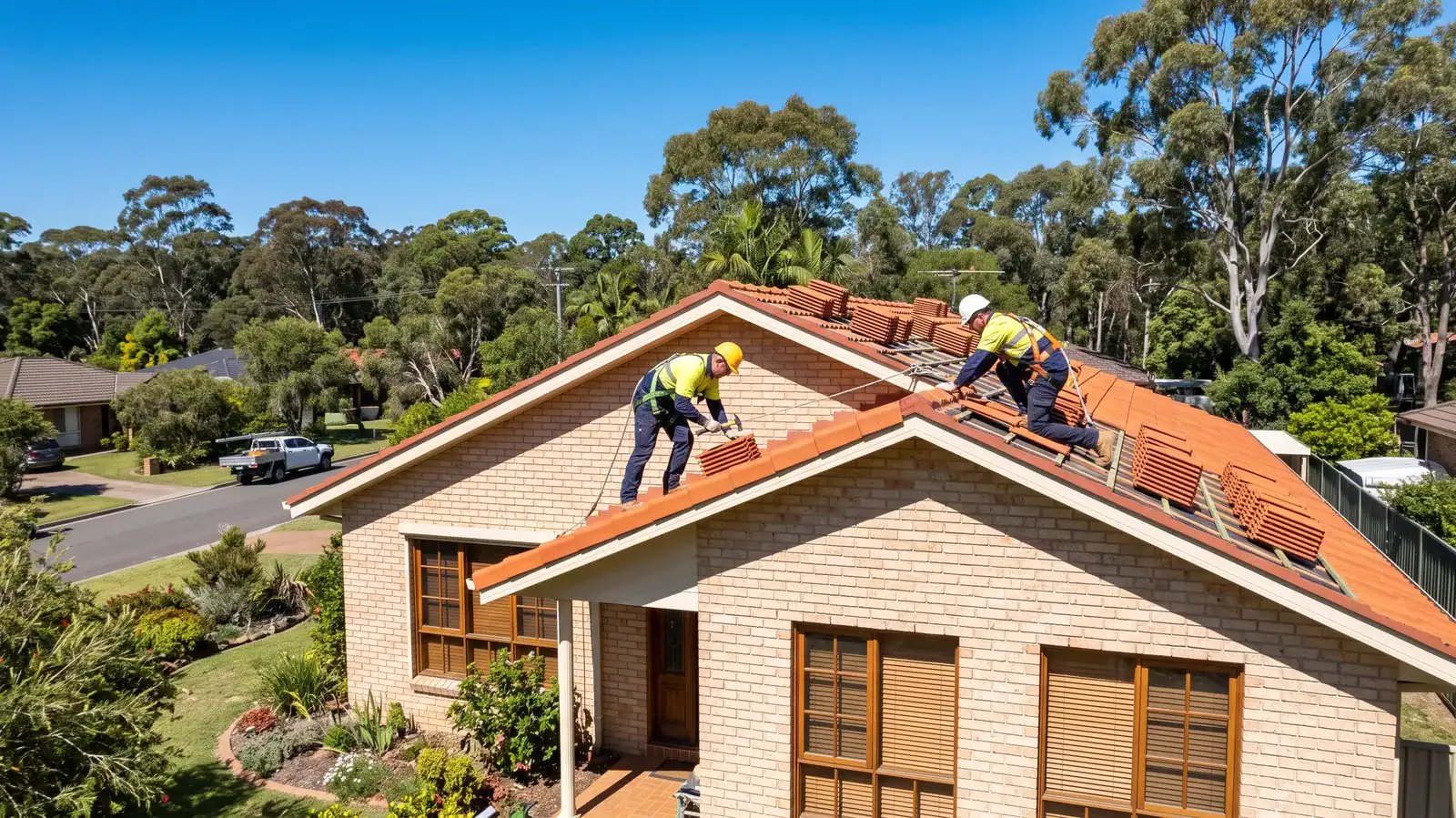
- Roof inspection. Every ridge cap is checked for movement. Any that need rebedding are flagged before work begins.
- Old pointing removal. Failed cement or compound is scraped away cleanly. Leaving old material underneath causes adhesion failure.
- Surface preparation. Bedding and tile edges are brushed clean and primed to help the new compound grip.
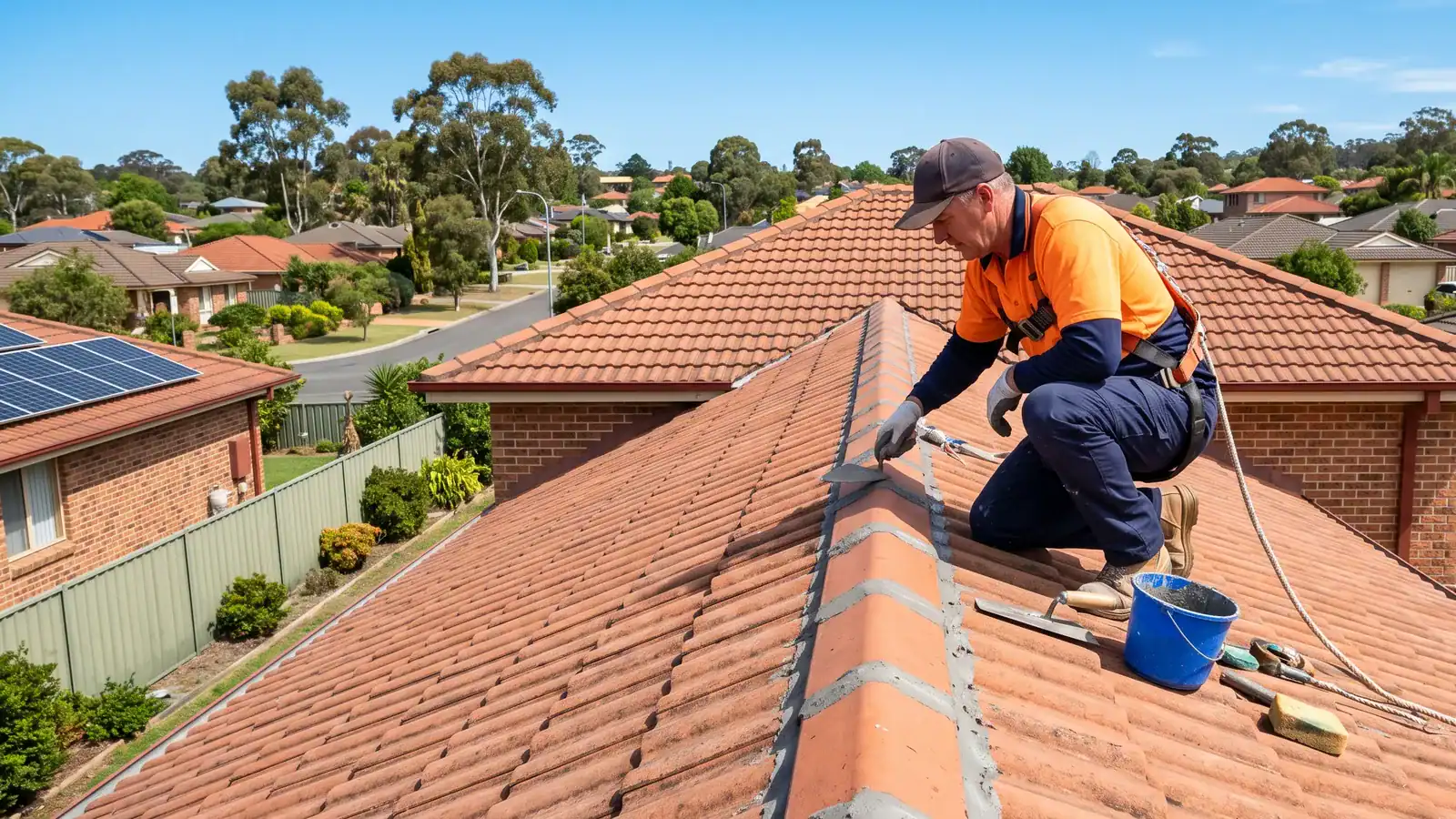
- Flexible compound application. New pointing is trowelled into the joint in a single pass. Acrylic-based compounds cure fast, so the roofer works in sections.
- Curing. Most flexible compounds reach full cure within 24 to 48 hours.
For a standard three-bedroom home, the process takes two to three days. Steeper roofs take longer.
Why Loose Ridge Caps Are More Than a Cosmetic Problem
Cracked pointing looks untidy, but the real risk starts when the bedding fails and the ridge cap is no longer secured.
An unsecured cap weighs 2 to 4 kg. In a storm, it can slide off the roof entirely. On a two-storey house, that is a fall from over 6 metres and a serious injury risk to anyone below.
- Storm damage: loose caps become projectiles in high winds, damaging gutters, cars, and neighbouring property
- Water ingress: the gap left by a missing cap funnels rain directly into the roof cavity
- Pest entry: possums, birds, and rats use open ridge lines as access points into the roof space
- Insurance complications: insurers may reduce payouts if the roof was in a state of disrepair before the storm event
Fixing cracked pointing before the bedding fails costs a fraction of what a full roof restoration runs.
How Failed Pointing Leads to Ceiling Leaks
The leak pathway is not always obvious. Water entering through a failed pointing joint at the ridge does not necessarily drip straight down. It travels.
Once past the pointing, water hits the sarking (the membrane under the tiles). If the sarking is intact, it redirects water sideways along a rafter or batten until it finds a nail hole or staple penetration.
The ceiling stain can appear metres away from the actual entry point.
- Pointing cracks at the ridge cap joint
- Rain enters during wind-driven storms (water pushed sideways under the cap)
- Water runs along the underside of the sarking membrane
- It pools at a batten junction or penetrates through a nail hole
- Moisture soaks into the ceiling plaster, showing as a brown ring or soft spot
By the time you see the stain, the timber has been absorbing moisture for weeks. Left unchecked, this leads to rot, turning what is typically a $2,000 repointing job into a structural repair that can run well past $10,000.
Spotted a ceiling stain? Roof repairs on the Central Coast start with finding the actual entry point, which is rarely directly above the stain.
What Roof Repointing Costs
Costs depend on how much of the ridge line needs work and whether any rebedding is required. For the Central Coast and Newcastle area, here are the typical ranges.
| Work type | Typical cost range | What is included |
|---|---|---|
| Repointing only | $10 to $15 per ridge cap tile | Scrape old pointing, clean, apply new flexible compound |
| Rebedding + repointing | $21 to $25 per ridge cap tile | Lift caps, remove old bedding, re-bed, then repoint |
| Full ridge restoration (average home) | $1,500 to $3,500 incl. GST | Complete rebedding and repointing of all ridge and hip caps |
Prices are approximate market guides only and vary by roof size, pitch, access difficulty, and the extent of existing damage. Contact All Pro Roof Restoration for an accurate quote based on your specific roof.
- Roof pitch affects cost. Steeper roofs need additional safety equipment and take longer.
- Access matters. Multi-storey homes or roofs surrounded by trees cost more due to scaffolding or difficult positioning.
- Extent of rebedding is the biggest variable. A roof that only needs repointing costs a fraction of one that needs full rebedding first.
A licensed roofer should provide a written quote after physically inspecting the roof, not a price over the phone. The Australian Standard AS 2050:2018 covers tile roofing installation and the condition of the bedding can only be assessed on the roof itself.
Frequently Asked Questions
Got a question about your roof? Contact All Pro for a free assessment.
What is the purpose of roof pointing?
Pointing seals the joint between ridge caps and surrounding roof tiles. Without intact pointing, wind-driven rain gets under the caps and into the roof cavity.
What is the difference between rebedding and repointing?
Rebedding replaces the thick mortar bed that physically holds each ridge cap in position. Repointing replaces the thin flexible seal on top. Rebedding is structural, repointing is weatherproofing.
If the caps are firm, you only need repointing. If they rock or shift, you need rebedding first.
How long does roof repointing last?
Modern flexible pointing compounds last 10 to 15 years in normal conditions. On the NSW coast, salt air and UV can reduce that to 8 to 12 years.
Can you repoint a roof yourself?
Technically yes, but it is not recommended. Working at height without proper safety equipment is dangerous and may void your home insurance.
Flexible pointing compounds cure quickly and require experienced application to get a clean, lasting finish. A poor DIY job often fails within a year or two.
How often should a roof be repointed?
Industry guidance suggests inspecting every 10 years and repointing when cracks or gaps appear. Coastal roofs or those with original cement pointing should be checked every 5 years.
How do I know if my ridge caps need rebedding or just repointing?
Press down on each ridge cap. If it is solid and does not move, you likely only need repointing.
If it rocks, shifts, or feels loose, the bedding underneath has failed and you need rebedding before the repoint. A licensed roofer can confirm this in a 30-minute roof inspection.
Get Your Roof Pointing Checked
Catching cracked pointing early means a straightforward repair. Left too long, it turns into a rebedding job, and left longer still, it becomes structural work.
If your roof is over 15 years old, or you have noticed cracked mortar, loose caps, or ceiling stains, get the roof checked before it gets worse. All Pro Roof Restoration services the Central Coast, Newcastle, Lake Macquarie, Hunter Valley and Port Stephens.
Request a free quote and David will inspect your ridge line, tell you exactly what needs doing, and provide a written quote before any work starts.