Cleaning terracotta roof tiles starts with checking their condition and the manufacturer’s cleaning instructions. A pressure setting copied from another roof is no guarantee against cracked tiles or water entering the roof space.
Need the roof assessed? All Pro provides professional roof pressure cleaning and advice on suitable methods across the Central Coast, Newcastle and Hunter Valley.
Why cleaning terracotta roof tiles needs a different approach
Terracotta tiles are kiln-fired clay, but their finish and condition vary. Glazed tiles, unglazed tiles and previously coated tiles should not automatically receive the same treatment.
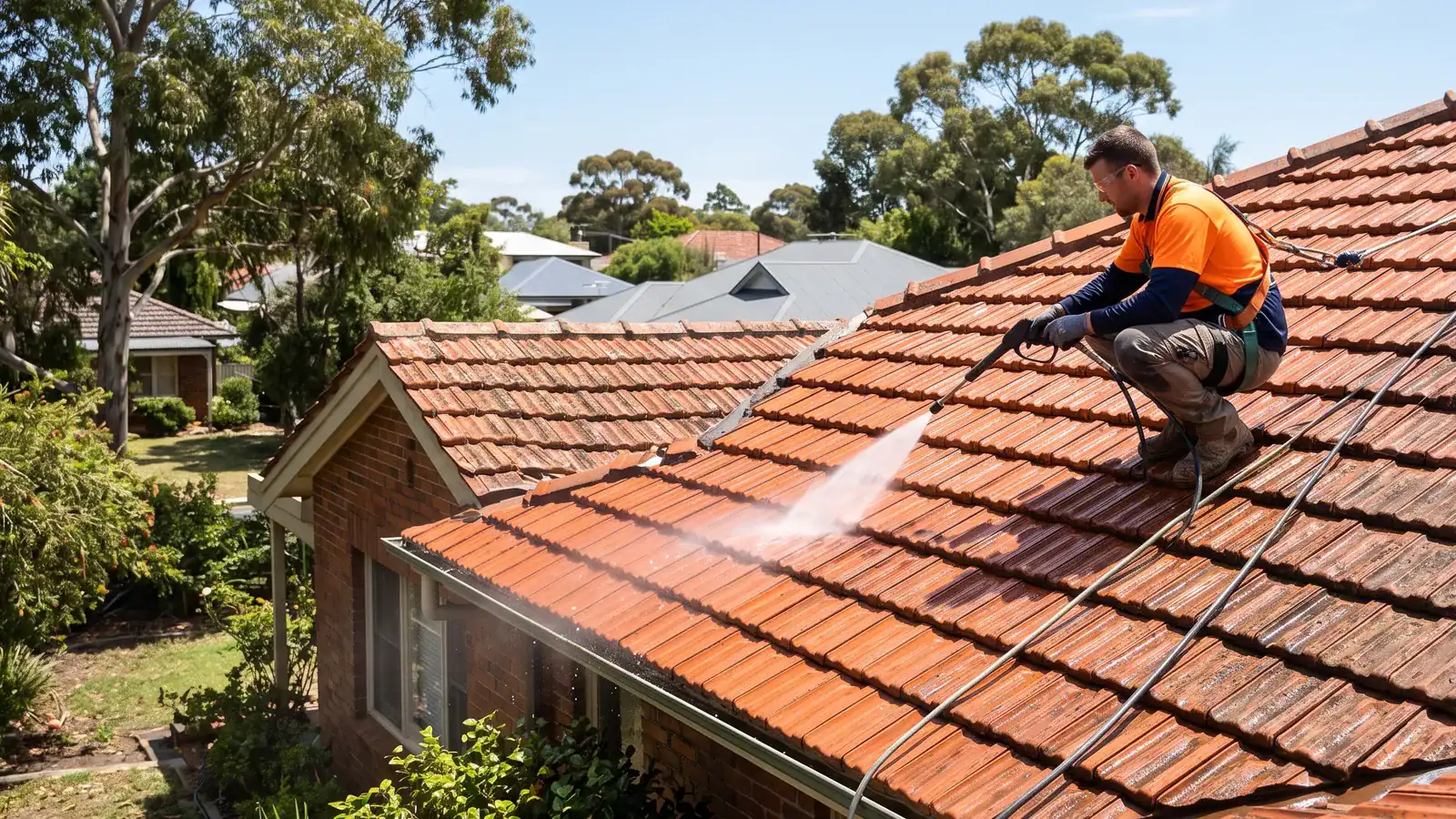
Monier’s roof cleaning and maintenance guidance advises against pressure washers because of tile damage risks and recommends using a qualified professional. Ask for advice specific to your tile before agreeing to a pressure clean.
| What to check | Why it changes the cleaning plan |
|---|---|
| Glazed or unglazed finish | The cleaner must be compatible with the actual surface. |
| Previous paint or sealant | A coating may react differently from exposed clay. |
| Cracks and flaking | Damaged tiles need assessment before cleaning. |
| Ridge mortar and tile overlaps | Loose joints and gaps need attention before water is applied. |
| Manufacturer instructions | These take priority over a generic pressure recommendation. |
If your Central Coast home still has its original terracotta roof, ask the roofer to identify the tiles and inspect previous repairs. Age alone does not tell you which cleaning method is suitable.
What causes dirty terracotta roof tiles
Moss, lichen and algae can establish where moisture and dirt collect. Shaded roof sections and areas beneath trees often need closer attention than exposed sections.
- Moss can form green clumps around tile edges.
- Lichen appears as attached patches that can resist gentle removal.
- Algae can leave slippery green or dark staining.
- Leaves collect in valleys and gutters, obstructing drainage.
- Dust and airborne debris can dull the roof’s appearance.
Staining alone does not prove that tiles are failing or that the roof leaks. Have blocked drainage, broken tiles and loose ridge caps assessed separately from the appearance of the surface.
Understanding why moss returns on Newcastle roofs can help you identify the shaded areas worth monitoring after cleaning.
How to safely clean terracotta roof tiles step by step
Use this sequence to discuss the job with a roofer. Keep your own inspection at ground level and use this checklist when discussing the work.
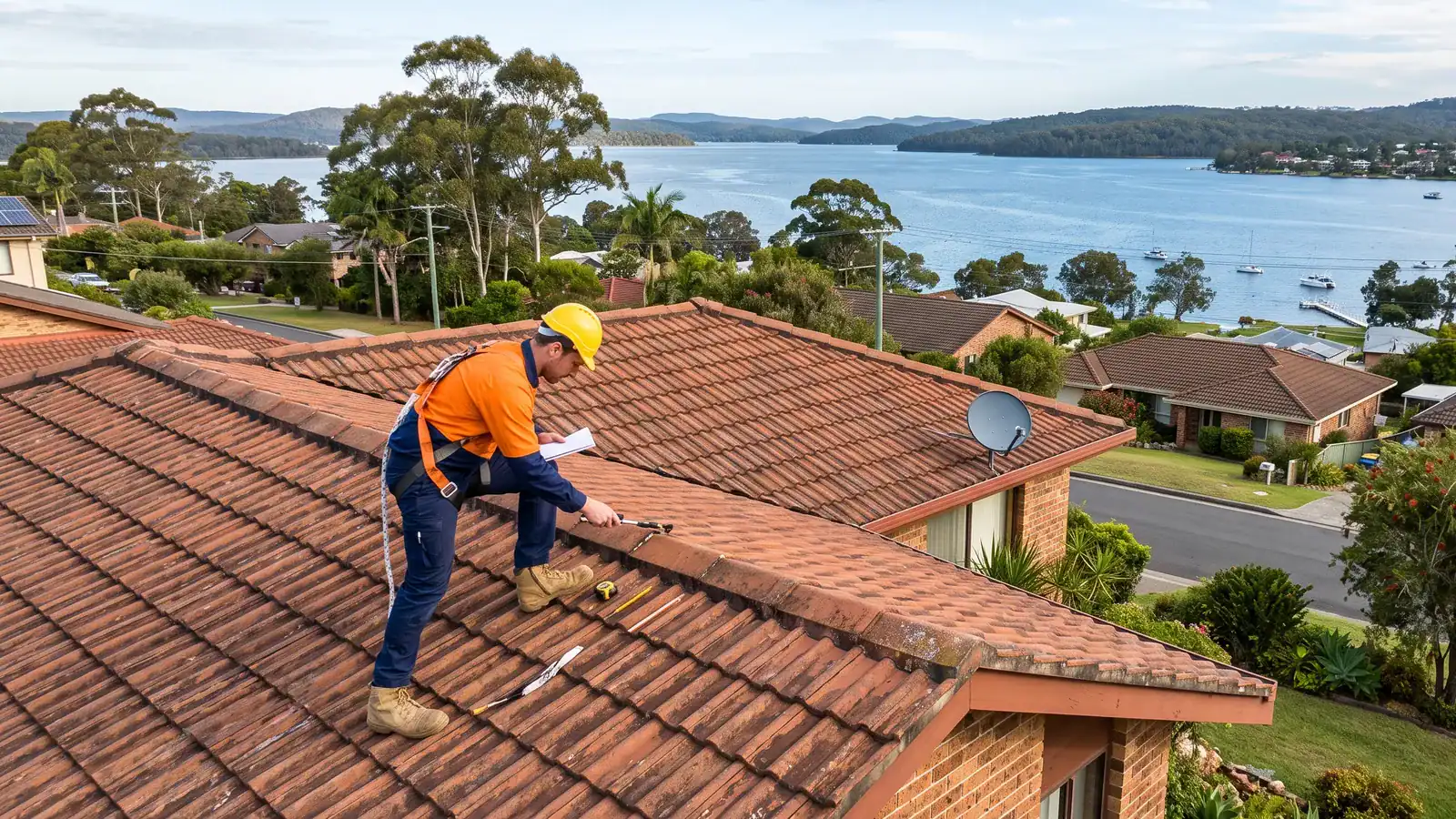
- Inspect first, including tile condition, ridge caps, flashings and any known leaks.
- Agree on access and fall protection before equipment arrives.
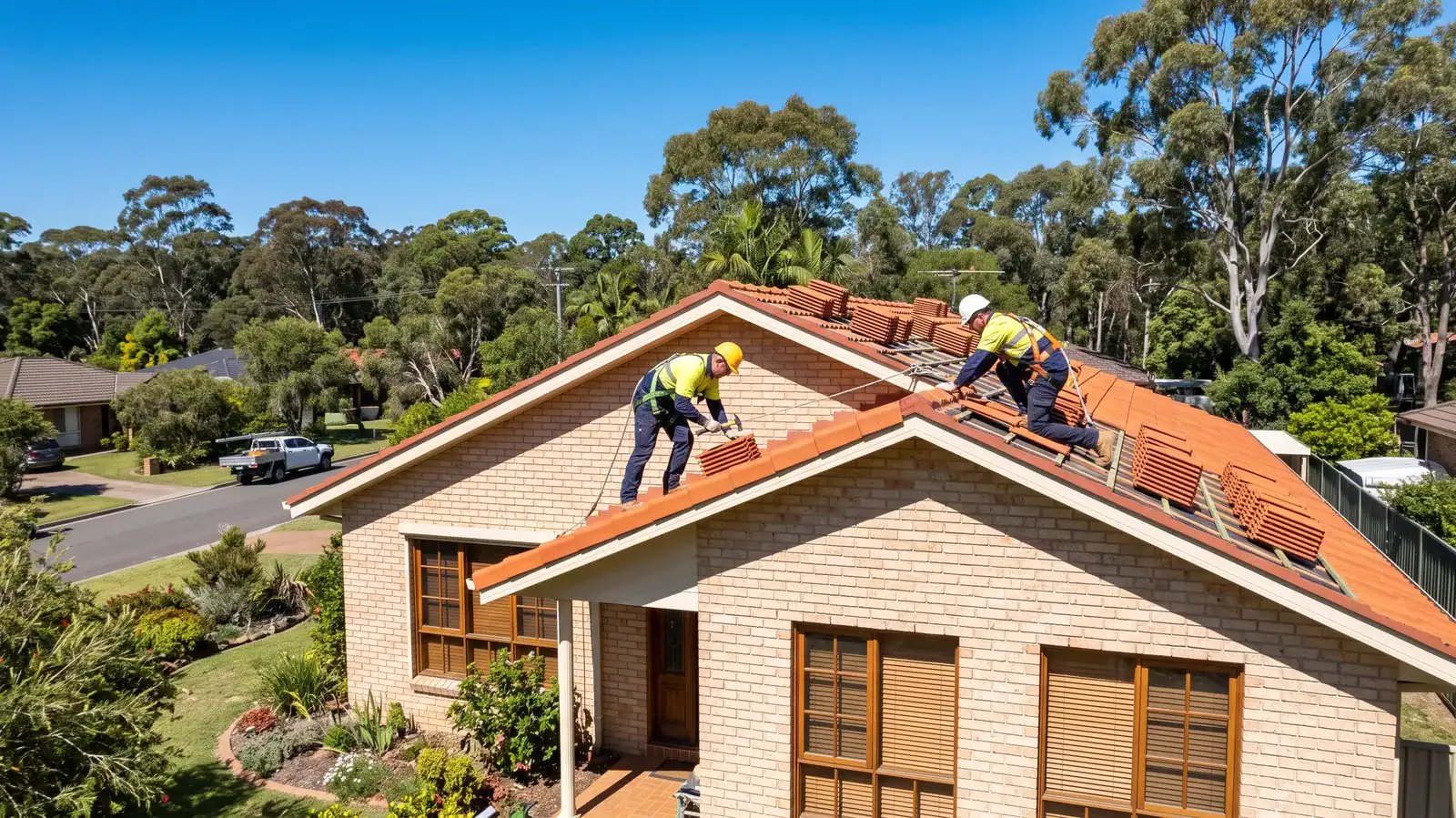
- Arrange any repairs needed before cleaning and identify fragile areas to avoid.
- Remove loose debris without scraping or levering against tile edges.
- Select a treatment approved for the tile surface and follow its label, including dilution and weather requirements.
- Test a small area before treating the rest of the roof.
- Check drainage and document the finished condition, including any follow-up work.
Soft washing uses a cleaning solution applied at low pressure; the cleaning solution still needs to suit the tile finish. Some treatments remain on the roof while weather gradually removes the dead growth, whereas other products require rinsing.
Bio-Shield’s clay roof application instructions, for example, describe gradual weathering and require rainwater tanks to be disconnected during treatment. Use the actual product’s instructions for reconnection, rather than assuming one shower of rain makes the water suitable.
Before chemicals are applied, identify tank connections, downpipes, garden beds, ponds and nearby surfaces. Ask how the contractor will manage runoff and keep people and pets away for the period specified on the label.
Do not mix cleaning chemicals or substitute a household bleach recipe for a roof treatment specification. A treatment that kills moss can still be unsuitable for the tile finish or the property’s drainage arrangements.
When to skip DIY and call a roofing professional
Roof access carries fall risks even when the tiles look sound. A low roof or a dry surface does not remove the need for a planned access system.
SafeWork NSW’s residential roof safety advice prioritises edge protection and work platforms before harness systems where practicable. Owning a harness is not a complete safety plan.
- Keep your own observations to ground level.
- Tell the roofer about leaks, storm damage and previous repairs.
- Flag skylights, solar panels and difficult access when requesting a quote.
- Ask how cracked tiles discovered during the job will be handled.
- Confirm insurance and the licence details for any roofing repairs.
All Pro handles terracotta roof cleaning across the Central Coast, with the method chosen after assessment. Newcastle homeowners can also request roof cleaning in Newcastle suited to their tile condition.
What to do after cleaning terracotta roof tiles
Ask for photographs of any defects exposed during cleaning. A cleaner surface can make existing cracks or damaged joints easier to see.
- Have damaged or displaced tiles assessed and repaired.
- Check ridge bedding and pointing, repairing defects where needed.
- Remove loosened debris from gutters, valleys and downpipes.
- Follow the treatment instructions before reconnecting rainwater collection.
- Keep the product name, work details and photographs with your roof records.
If tiles are cracked or ridge capping is loose, our roof repair service can fix the damage with repairs suited to the affected tiles and joints. Cleaning alone cannot repair an open joint or replace a broken tile.
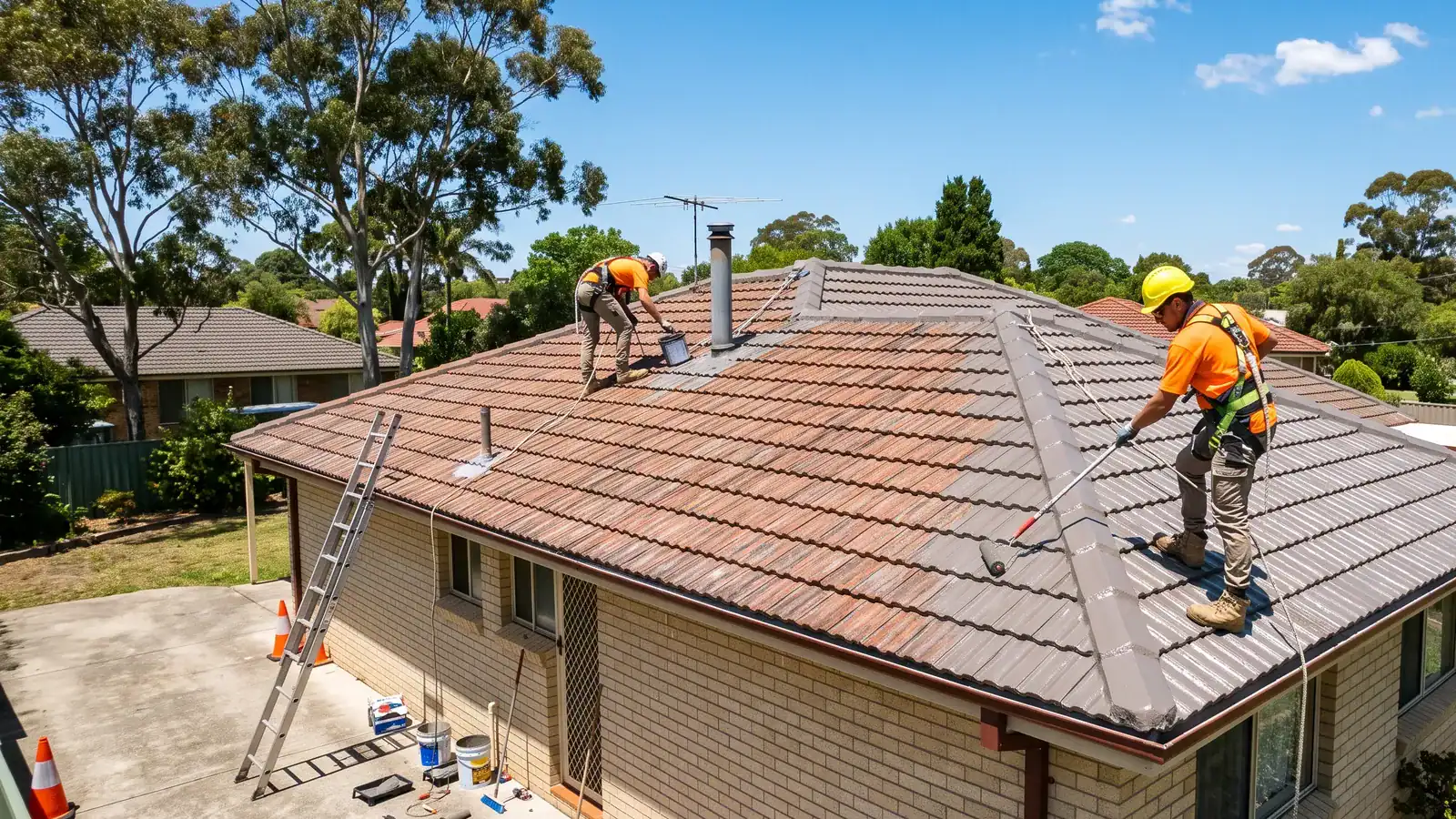
Do not automatically add a sealer or paint after cleaning. Monier states that terracotta does not need respraying because its colour is fired into the tile; any proposed coating needs separate confirmation of suitability for your particular roof.
How often should you clean a terracotta roof
Base cleaning on inspection findings, the tile manufacturer’s advice and the treatment label. A fixed interval cannot account for every roof’s shade, drainage or previous treatment.
- Watch for leaves collecting after windy weather.
- Arrange gutter and valley clearing when debris obstructs drainage.
- Monitor treated areas for fresh growth.
- Get new leaks or visible damage checked promptly.
A professional roof assessment tells you whether your tiles need cleaning, a full terracotta roof restoration, or just minor repairs. Ask what each proposed repair addresses before accepting a larger package.
What to check in a roof cleaning quote
A useful quote should explain how the roof will be cleaned and what happens if damage is found. Compare the scope as well as the price.
- The proposed cleaning method and product.
- Access arrangements and protection for the property.
- Repairs included, excluded or priced separately.
- Gutter cleanup, runoff management and follow-up expectations.
Get a free quote from All Pro Roof Restoration for an assessment before work begins. Owner David is a licensed tradesman with over 30 years of experience, and the NSW Fair Trading licence number is 178790c.
Frequently asked questions
- Identify the tile before choosing a cleaner.
- Check the manufacturer’s instructions before pressure washing.
- Separate cleaning needs from repairs and coatings.
Can you pressure wash a terracotta roof?
Do not assume it is suitable. Monier advises against pressure washers, so seek tile-specific confirmation rather than accepting a generic assurance that low pressure is safe.
Can clay tiles from 15 years ago be jet washed?
Tile age does not answer that question. The manufacturer, finish, existing damage and condition of the roof joints must be checked first.
How do you clean very dirty terracotta tiles?
Have loose debris removed and the growth assessed before choosing a compatible treatment. Stubborn patches may need time or follow-up treatment, rather than stronger pressure or forceful scraping.
How do professionals clean roof tiles?
Roofers assess the roof, plan safe access and select a method compatible with the tiles. Ask whether the quote includes debris removal, treatment, any required rinse and a final inspection.
What pressure is safe for terracotta tiles?
There is no universal pressure setting to recommend for every terracotta roof. A machine’s pressure reading alone cannot establish whether its use meets the tile manufacturer’s instructions.
Does pressure cleaning void my roof warranty?
Check the terms for your tile and any existing coating, and ask the supplier to confirm the proposed method in writing. Keep that advice with the contractor’s scope and photographs.
What is the best cleaner for terracotta roof tiles?
Choose a product expressly suitable for your roof tile finish and the growth being treated. The label and tile manufacturer’s advice matter more than a general claim that a cleaner is safe for terracotta.
How long does moss treatment take to work?
Treatment time depends on the product and amount of growth. Spray-and-leave treatments can take months to clear visible residue, so confirm the expected result and review date before booking.
Does cleaning stop roof leaks?
Clearing blocked drainage may address one source of overflow, but washing does not fix damaged tiles, flashings or ridge joints. Have an existing leak diagnosed rather than relying on a clean to solve it.