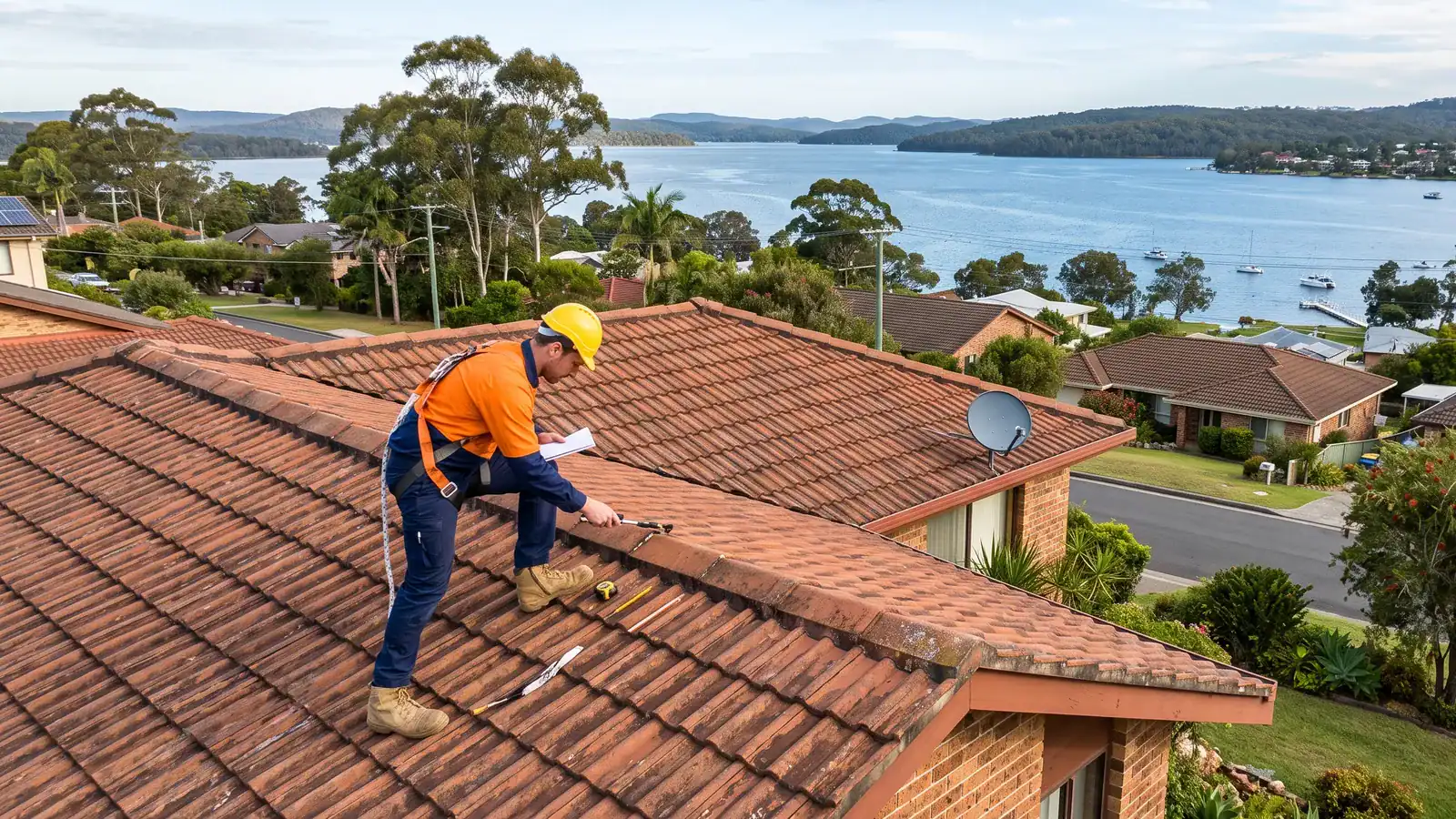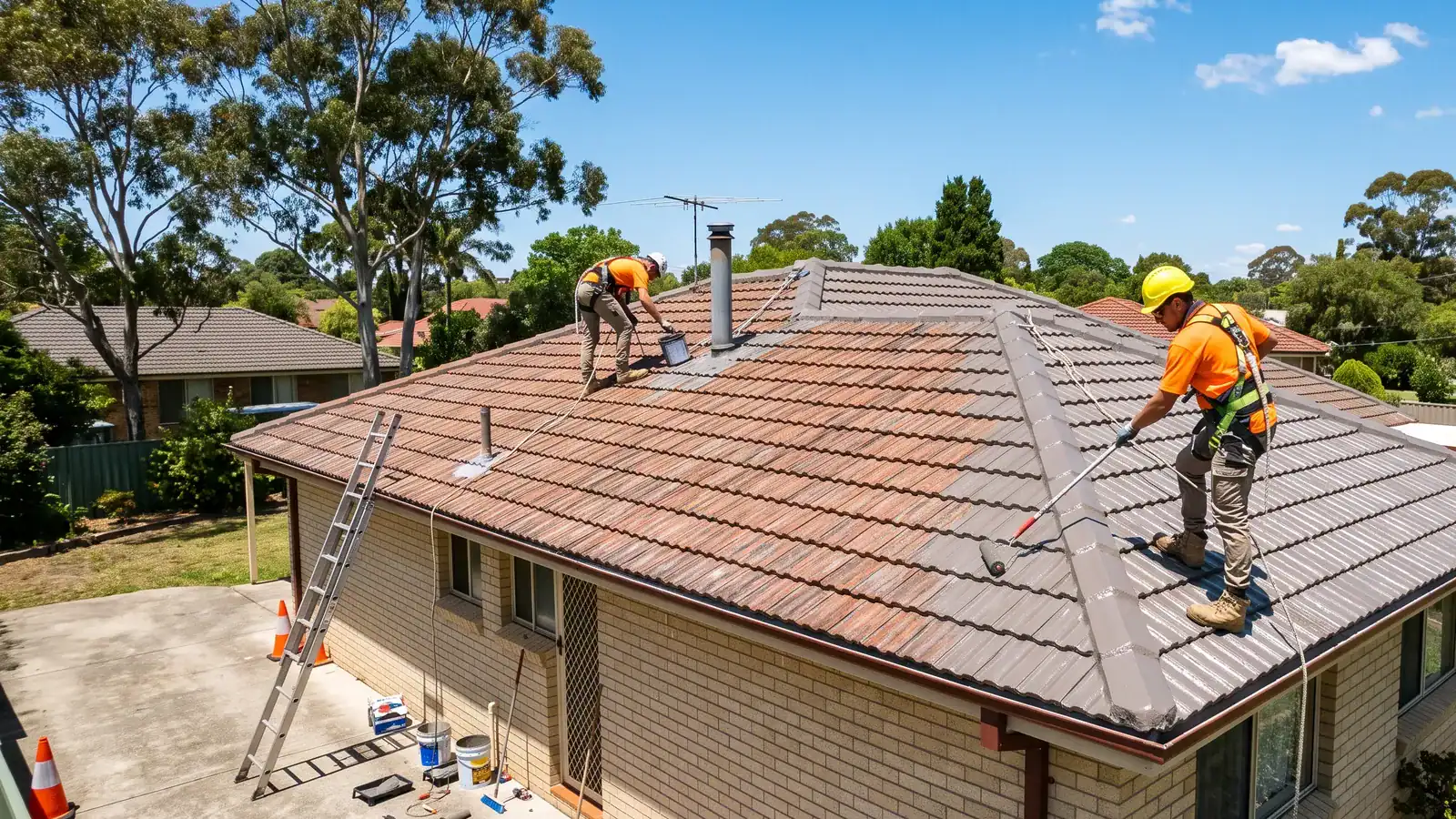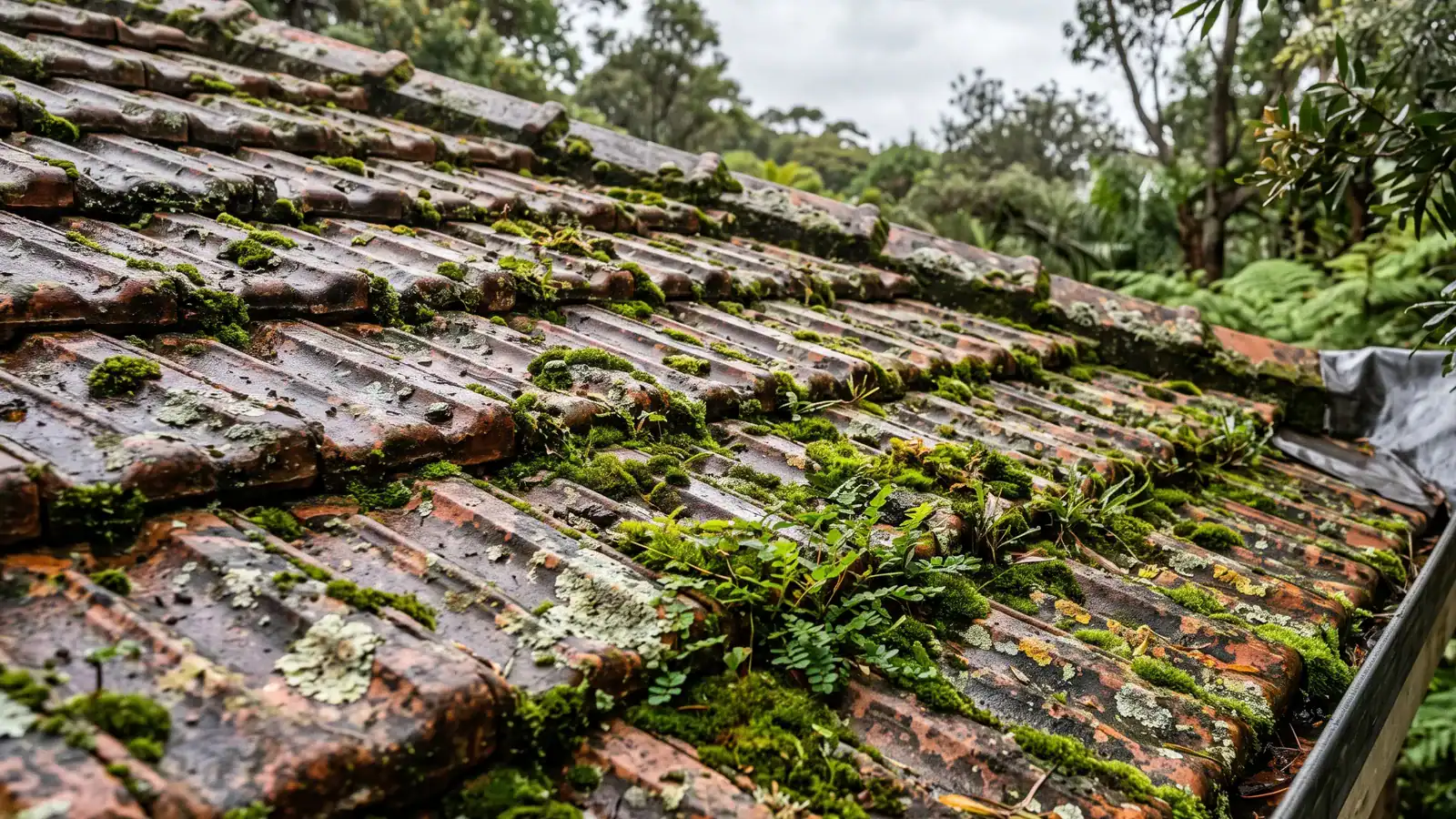
Moss grows where a roof stays damp, especially on shaded slopes that dry slowly after rain. On coastal Newcastle homes, check those conditions before assuming salt air alone is responsible.
The Bureau of Meteorology’s Newcastle Nobbys climate records show rainfall throughout the year.
Newcastle homeowners dealing with moss build-up can learn more about professional roof cleaning across Newcastle and the roof restoration options available for coastal properties.
Why Moss Grows on Coastal Newcastle Roofs
Coastal weather can contribute to damp roof conditions. A sheltered roof under trees in Maitland can stay wetter than an exposed roof near Merewether Beach.
For homes in Bar Beach, Stockton or Swansea, inspect where growth appears and where water or leaf litter collects. Two slopes on the same house can look quite different because their shade and drying conditions differ.
- Overhanging branches shade tiles and drop leaves into roof valleys.
- South-facing slopes generally receive less direct sun in Newcastle, particularly in winter.
- Leaf litter and blocked drainage paths can keep local areas wet.
- Rough or weathered surfaces give growth places to attach.
- Sheltered areas around roof features may dry more slowly than open slopes.
Salt exposure also deserves attention during an inspection, especially where metal components or coatings show deterioration. Understanding how salt air affects roof paint in Newcastle helps separate coating maintenance from the moisture conditions associated with moss.
Do not assume that every dark patch is moss. Moss usually forms leafy clumps, while crusty lichen and flat staining need identification before anyone chooses a cleaning method.
What Moss Actually Does to Your Roof
The Australian National Botanic Gardens explains that moss has anchoring rhizoids, rather than true roots. Moss anchors to surfaces without the true roots found in trees.
A few patches do not prove that your roof is failing. Tile manufacturer Marley’s moss and lichen guidance distinguishes generally harmless light growth from heavy build-up that can obstruct water flow and keep tiles wetter.
Judge the roof by its condition, rather than the supposed age of the moss. Colour cannot reliably tell you how long growth has been present or whether the tiles underneath are sound.
| What you notice | What to check | Practical next step |
|---|---|---|
| Scattered surface patches | Whether drainage remains clear and tiles are intact | Monitor from the ground and discuss at the next inspection |
| Thick growth at tile overlaps | Whether water can drain freely | Have the roof assessed before removing the moss |
| Moss and leaves in gutters | Overflow, blocked outlets and debris | Have the drainage cleared safely |
| Broken tiles, loose ridge pointing or ceiling stains | The actual route of water entry | Arrange repairs promptly; cleaning alone will not fix defects |
Where cleaning reveals wider defects, the steps involved in a full roof restoration explain how repairs and surface preparation fit together. Moss coverage alone is not enough to justify that work.
How Different Roof Types Handle Moss Growth
The roof material, existing finish and condition determine which treatment is suitable. A method used on a neighbour’s roof may be unsuitable for yours.
- Concrete tiles need checking for cracks, surface wear and previous coatings before cleaning; why older Newcastle tile roofs fade and crack explains related signs of deterioration.
- Terracotta tiles can be glazed or unglazed, so avoid treating every clay tile as having the same surface; cleaning terracotta roof tiles without cracking them requires attention to their condition and safe access.
- Colorbond and other metal roofing need cleaning products compatible with the coating, fixings and drainage components.
- Slate needs careful access and an assessment of loose or damaged pieces before removal work.
- Older fibro roofing needs identification before cleaning because it may contain asbestos.
For metal roofs, BlueScope’s maintenance bulletin recommends testing a cleaning method on an inconspicuous area and keeping detergent runoff out of water tanks. A cleaner suitable for masonry is not automatically suitable for coated steel.
If an older roof may contain asbestos, stop before brushing, scraping or washing it. SafeWork NSW’s asbestos guidance prohibits high-pressure water cleaning of asbestos-containing material; arrange competent identification and advice first.
Safe Moss Removal Methods for Coastal Roofs
Start with an inspection and a material-specific plan. Ask how the contractor will protect the roof finish and collect debris before it reaches gutters or downpipes.
Soft washing
Soft washing applies cleaning solution at low pressure, but the name alone does not establish that a process suits your roof. Product compatibility, concentration, contact time and rinsing instructions still matter.
Manual removal
Careful hand removal can deal with bulky growth before further treatment. Aggressive scraping or wire brushing can damage finishes.
Pressure cleaning
Concrete tiles are not automatically safe to pressure clean. Ask the contractor to explain whether the manufacturer permits it and how the proposed method avoids surface damage or forcing water beneath the covering.
Before booking roof pressure cleaning for moss-covered tiles, ask whether lower-pressure treatment would suit the roof better and whether repairs must come first.
Chemical treatments
Use a product labelled for the intended roof surface and follow its directions. Do not improvise mixtures or assume that a treatment suitable for a driveway is suitable for roof coatings and rainwater collection.
| Method | What to establish before work |
|---|---|
| Soft washing | The chemical suits the finish, even though application pressure is low. |
| Manual removal | The tools and access plan avoid scraping the finish or breaking tiles. |
| Pressure cleaning | The roof manufacturer permits the method and water will not be driven under tiles. |
| Chemical treatment | The label covers the surface, weather conditions, runoff and any rainwater tank connection. |
For roof-fed tanks, BlueScope’s roof cleaning and rainwater collection precautions warn against allowing soap or detergent runoff into water tanks. Ask the contractor how collection pipes will be isolated during treatment and when they can be reconnected, following the cleaning product instructions.
- Confirm the roof material and check for existing damage.
- Agree on protection for plants, pets and neighbouring areas.
- Identify rainwater tanks and arrange runoff management before treatment.
- Clarify whether debris removal, gutter clearing and a follow-up visit are included.
DIY Moss Removal vs Calling a Professional
Keep your own checks at ground level, using binoculars or photographs where useful. A low awning or carport can still be fragile, slippery or unsafe to stand on.
A professional assessment should explain what needs attention and why. Ask these questions before accepting a quote:
- What is the growth, and is it obstructing drainage?
- Are cracked tiles, worn coatings or failed pointing present?
- How will access and fall protection be managed?
- Which product and cleaning method suit this particular roof?
- What repairs are included, and what would cost extra?
All Pro Roof Restoration is owner-operated by David, a licensed tradesman under NSW Fair Trading licence 178790c. Explain any leaks, previous repairs or tank connections when arranging an assessment.
Photos taken from the same ground-level spot can help show whether a patch is spreading. Include the location of any gutter overflow or ceiling staining, rather than relying only on close-ups of green tiles.
How to Stop Moss Coming Back After Cleaning
Cleaning removes existing growth, but shade and debris can remain. Clearing leaves and reducing shade can help slow its return.
- Arrange appropriate pruning of overhanging branches where permitted and practical.
- Keep roof valleys, gutters and outlets clear through safe maintenance.
- Check for new build-up after prolonged wet weather or heavy leaf fall.
- Follow the cleaning product’s maintenance directions.
- Have damaged surfaces assessed before adding any sealer or coating.
If loosened moss collects at gutter outlets, arrange professional roof gutter cleaning and confirm that debris removal is included.
A simple record of regular roof maintenance checks for homeowners helps you track recurring trouble spots and previous work. Keep inspection photos and the names of treatments used so the next contractor knows what is already on the surface.
Before paying for a coating, understand when roof sealing is worth considering. Sealing is not a universal requirement after moss removal and should suit the material and its condition.
If suitable concrete tiles need recoating, professional roof painting across Newcastle may form part of the work. Any proposed Dulux Acratex system needs the specified preparation and suitable application conditions; paint does not guarantee that moss will never return.
Best Time of Year to Remove Roof Moss in Newcastle
Choose a suitable forecast and follow the treatment label rather than booking by season alone. Newcastle can receive rain in every season, and wind also matters when applying cleaning products.
- In spring, inspect growth that became noticeable during the cooler months.
- In summer, check heat limits and avoid unsuitable wind or storm conditions.
- In autumn, pay attention to accumulated leaves and drainage before further wet weather.
- In winter, allow for slower drying and postpone work when conditions are unsuitable.
Winter work may still be possible when the forecast and treatment instructions allow it. If defects call for a full restoration rather than a clean, ask how repair work and any weather-dependent coating stages will be scheduled.
Frequently Asked Questions
- Drainage, material condition and safe access determine the right response.
- Ask for advice specific to your roof before choosing a treatment.
Moss damage and cleaning decisions
Does moss cause roof leaks?
Heavy growth can interfere with water runoff, but a leak needs its own diagnosis. Cracked tiles, flashing defects and blocked gutters should be checked rather than assuming moss is the only cause.
Can moss shorten my roof’s lifespan?
Growth that obstructs drainage deserves attention, but there is no reliable number of years to subtract from a roof’s life. An inspection is more useful than a replacement prediction based on green patches.
Is roof moss removal covered by insurance?
Check your policy wording and ask your insurer about the specific circumstances before assuming cover, as ASIC Moneysmart’s home insurance claims guidance recommends. Keep photos and inspection records if there is associated damage, and confirm how maintenance exclusions affect your claim.
How often should I clean my roof on the coast?
Base the timing of professional roof cleaning on inspections, shade, debris and the roof’s maintenance instructions. Distance from the beach alone does not establish an annual cleaning requirement.
Can I paint over moss?
No, growth and contamination must be removed as part of professional roof painting preparation. The surface then needs to meet the coating system’s requirements for condition, dryness and priming.
Treatment, timing and regrowth
Is bleach or vinegar effective for roof moss?
Do not choose household chemicals on the assumption that they are roof-safe. Use only a compatible roof treatment, following its label and suitable runoff precautions.
How long does professional moss removal take?
Access, roof size, growth and the treatment process determine the time required. Ask how long the crew will be there, how soon you should see results and whether they will return to clear debris.
How long does moss take to grow back after cleaning?
There is no dependable interval for every coastal roof. Persistent shade and debris can favour recurrence, so ask what maintenance is needed and what any treatment warranty actually covers.
Does moss treatment work on both tile and metal roofs?
Tile and metal roofs may need different products and methods. Identify the finish and check its maintenance instructions before proceeding.
Can I remove moss from my roof myself?
Keep DIY checks on the ground and leave work on the roof to someone with suitable access and fall protection. Tile manufacturer Marley’s roof moss removal advice warns that both roof access and cleaning can cause injury or damage.
What is the best time to remove roof moss in Newcastle?
Book a weather window that meets the product’s rain, wind and temperature limits, rather than assuming summer is always suitable. If water is entering the house or a gutter is overflowing, arrange an assessment promptly instead of waiting for a preferred season.
Get Your Newcastle Roof Assessed
If moss is collecting at overlaps or gutters are overflowing, arrange an assessment. Where defects are found, targeted roof repairs for Newcastle homes may be needed alongside cleaning.
- Describe where the growth appears and whether it is spreading.
- Mention leaks, damaged tiles and any previous roof coatings.
- Ask for an explanation of the recommended work and what the quote includes.