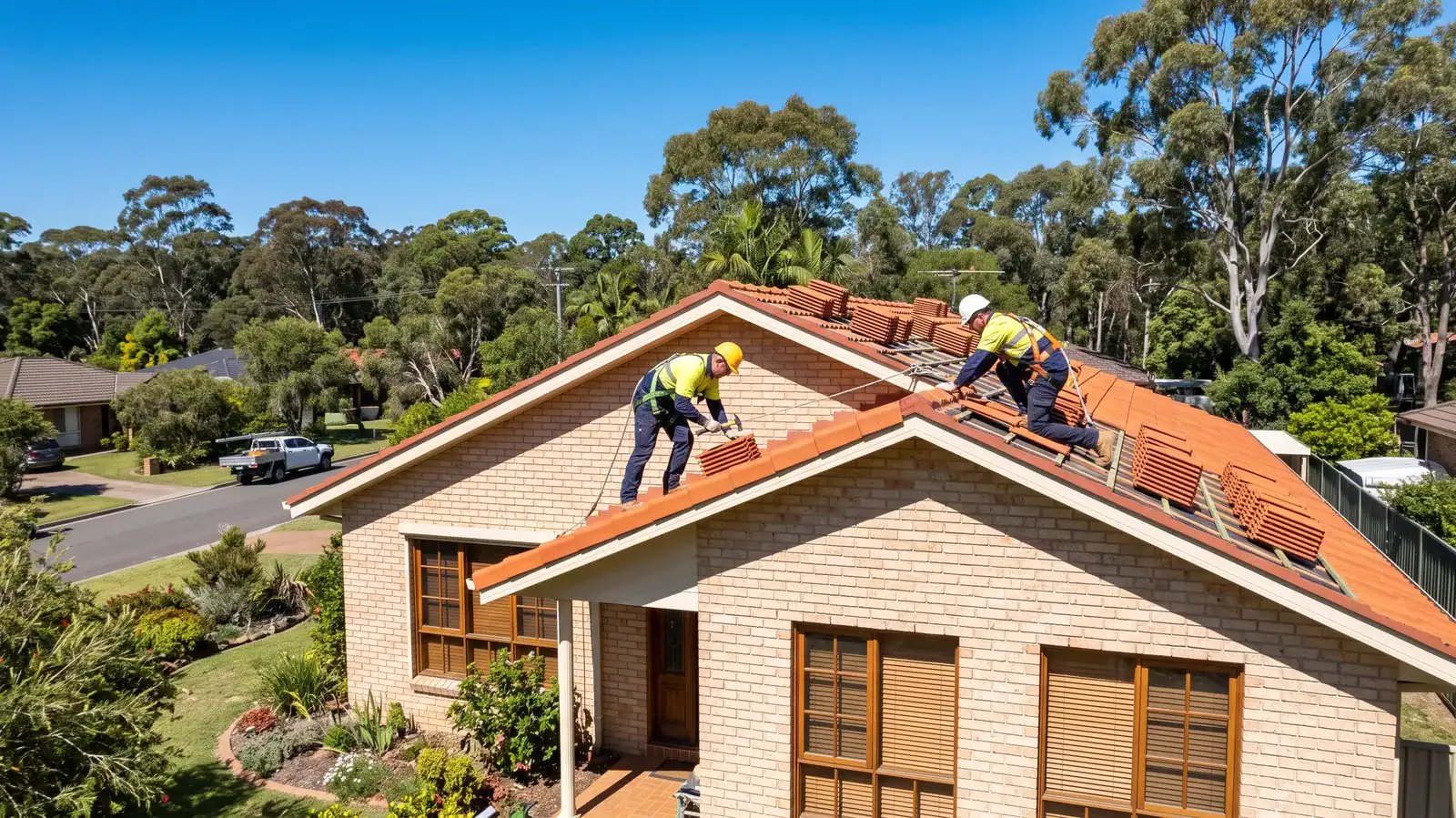
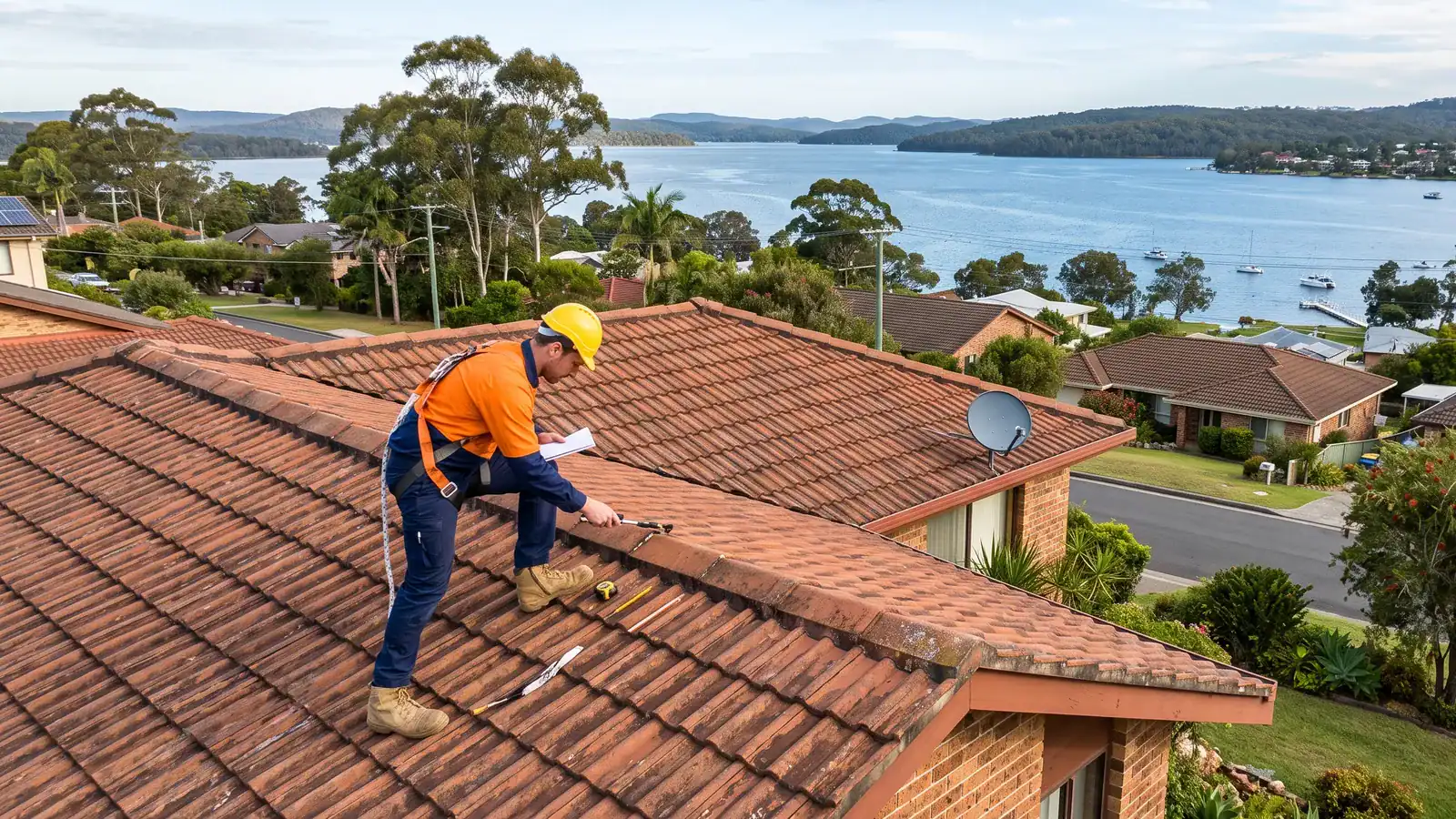
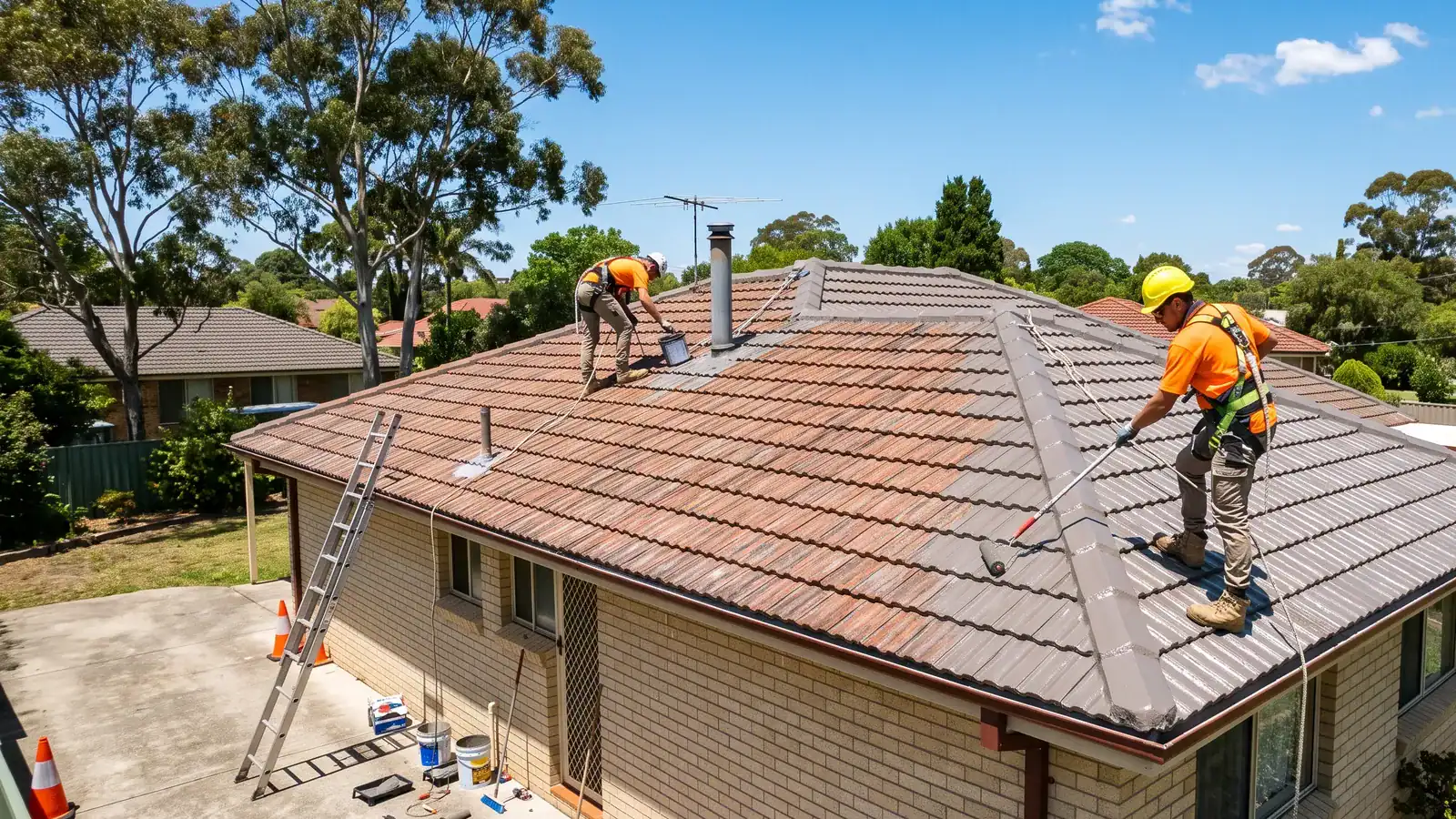
Fading on a Newcastle tile roof can be cosmetic, while cracked or displaced tiles need checking for water entry. Fading alone does not show whether a tile is damaged.
Older homes across Newcastle and the Hunter often have concrete or terracotta tiles with patchy colour, surface growth or chipped edges. Those signs need different treatments, so colour alone is a poor reason to replace a roof.
Loose ridge caps and damaged flashing can cause leaks even where the surrounding tiles look sound. An inspection should cover these details as well as the faded areas you can see from the street.
If your roof is already leaking or you have noticed cracked tiles after a storm, arrange roof repairs in Newcastle promptly. Ask about inspection availability and temporary protection if rain is forecast.
Signs Your Newcastle Tile Roof Needs Attention
Some roof problems are obvious from the street; others need a roofer to investigate. Check what you can see from a safe position on the ground, without climbing onto the roof or entering a wet ceiling space.
- Visible colour loss or patchy fading, especially on the north-facing slope where UV hits hardest
- Cracked, chipped, or broken tiles visible from ground level or during gutter cleaning
- Moss, lichen, or dark staining spreading across the surface, particularly on the south side
- Ridge caps that look displaced, or gaps and loose pieces in the mortar beneath them
- Damaged or missing flashing around valleys, vents, or roof penetrations, which often only shows as water marks inside the house
- Unusual tile fragments or surface debris visible around downpipe outlets
- Water stains on ceilings or walls after rain, even minor discolouration
- Sagging or dipping sections along the roofline that need assessment
One cracked tile does not mean the whole roof needs replacing. Arrange an inspection if you notice cracked or displaced tiles, loose ridge caps, ceiling stains or a sagging roofline.
What Causes Tile Roofs Across Newcastle to Fade
Weathering, the original finish and previous maintenance all affect tile colour. First check whether a dull patch is worn coating, dirt or biological growth before deciding it needs repainting.
UV Degradation
Exposed slopes receive different amounts of sunlight and shade. That can leave one roof face looking much more weathered than another.
Concrete tile finishes can change colour as they weather, but there is no reliable fading deadline that applies to every roof. The original product and any later coating matter more than assuming every tile fades after a set number of years.
Salt Air and Coastal Moisture
Homes near the coast, from Stockton through to Redhead, need checks of exposed metal flashings and fixings as well as tile surfaces. A chalky or rough finish needs assessment; appearance alone does not establish that salt has damaged the tile body.
Biological Growth
Moss, lichen and algae can obscure the tile surface and collect in shaded areas. Cleaning can reveal defects that were difficult to see beneath the growth.
South-facing slopes and sections beneath trees often stay damp longer. Professional roof cleaning in Newcastle should use a method suitable for the tile and its condition.
Concrete vs terracotta fading: Concrete tiles can weather in colour, while terracotta colour is fired into the tile. Monier’s tile maintenance advice explains that terracotta does not need respraying and warns against pressure washers because they can damage tiles.
What Causes Cracked Roof Tiles
Cracked tiles can let water beneath the roof covering, particularly when rain is driven across the slope. A roofer needs to check the crack, tile overlap and layers underneath to understand the leak risk.
- Storm impact: Hail, falling branches and wind-driven debris can chip or break tiles. Damage may be scattered across a roof face rather than confined to the area above a ceiling stain.
- Movement: Changes in temperature and movement in the roof structure can affect joints and existing defects. Repeated cracking warrants a check of the support beneath the tiles.
- Foot traffic: Loading unsupported parts of a tile can break it. Tell the roofer if the damage appeared after antenna, solar or other roof work.
- Existing deterioration: Tiles with chips, cracks or damaged interlocks may be more vulnerable to further breakage. Age alone does not tell you whether an entire roof is unsound.
- Loose ridge caps: Failed bedding or pointing can leave capping insecure. The repair needs to address the failed material rather than cover the gap with paint.
An isolated cracked tile can often be handled with a repair to the damaged roof tiles, provided compatible replacements are available and the support is sound. Cracking across several tiles warrants a check for impact damage, poor support or movement.
If cracks have already let water through, finding the cause of a roof leak helps direct repairs to the entry point rather than just the ceiling stain.
Concrete vs Terracotta Tiles in Coastal Conditions
The type of tile on your roof affects how it handles Newcastle’s coastal environment and how long you can expect it to last before needing restoration work.
| Factor | Concrete Tiles | Terracotta Tiles |
|---|---|---|
| What fading tells you | The finish may have weathered; check the tile separately. | Check for surface deposits and the condition of the fired finish. |
| Colour method | Pigments and surface finishes vary by product. | Colour is developed during firing. |
| Lifespan assessment | Inspect cracks, tile fit, support and repair history. | Inspect cracks, tile fit, support and repair history. |
| Coastal maintenance | Check tiles, exposed metalwork and drainage. | Check tiles, exposed metalwork and drainage. |
| Crack assessment | Impact or poor support can damage tiles. | Impact or poor support can damage tiles. |
| Restoration suitability | Repairs and compatible recoating may suit sound tiles. | Repairs and suitable cleaning; do not assume painting is needed. |
| Replacement availability | Match the profile and interlocks, not just colour. | Match the profile and interlocks, not just colour. |
For either material, roof restoration in Newcastle should start with a condition assessment. A sound but faded roof needs a different scope from one with widespread breakage or damaged support underneath.
Repair, Restore, or Replace: How to Decide
The answer depends on the tiles, the timber structure underneath and the extent of the defects. A tidier roof can improve kerb appeal; keep the inspection report and repair records if you plan to sell.
When Repair Is Enough
- Isolated cracked or broken tiles, with sound surrounding tiles and support
- Ridge caps need rebedding but the tiles themselves are sound
- A single leak traced to a specific tile or flashing failure
When Restoration Makes Sense
- Widespread fading but tiles are structurally solid
- Surface coating is worn but tiles are not crumbling
- Ridge capping needs full rebedding and repointing across the roof
- The remaining tiles and timber frame are sound enough to justify the work
When to investigate replacement
- Tiles are crumbling or delaminating, not just cracked
- The timber battens or rafters underneath are rotting or sagging
- Suitable matching tiles cannot be sourced in the quantity required
- Repairing the roof would still leave extensive defects or inaccessible damage underneath
Compare the work included. Ask for a written comparison of targeted repairs, a complete roof restoration and replacement where appropriate, with the defects each option would address.
What a Tile Roof Restoration Involves
A tile roof restoration begins with finding defects and agreeing which work the roof actually needs. The quote should list the repairs, cleaning method and coating products before work starts.
- Inspection and assessment: Check the tiles, ridge caps, valleys, flashing and accessible support. Record where water is entering and whether any underlying damage needs a separate repair.
- Suitable cleaning: Before booking roof pressure cleaning for an older roof, confirm that the tile manufacturer permits the proposed method. Pressure washing should not be treated as suitable for every concrete or terracotta roof.
- Repairs: Cracked and broken tiles are replaced, and damaged flashing is repaired or replaced as needed. If damaged timber is found, ask whether its repair is included or needs a separate quote.
- Rebedding and repointing: Rebedding replaces failed mortar supporting ridge caps; flexible pointing finishes the exposed joint over sound bedding. Understanding when ridge caps need repointing helps you compare this work with a full rebedding quote.
- Compatible recoating: Sound concrete tiles may suit a specified primer and roof membrane such as Dulux Acratex. Confirm suitability, preparation, coat requirements and written warranty terms for the selected system; ask who provides each warranty and what it covers.
Ask for a schedule that allows for repairs, suitable weather and the product’s drying requirements. Avoid planning other roof work immediately after coating, and leave roof access to the tradespeople handling the job.
Roof Maintenance Near the Newcastle Coast
Newcastle’s coastal setting makes exposure worth discussing during an inspection, particularly around Merewether, Bar Beach, Newcastle East and Stockton. The Bureau of Meteorology’s Newcastle Nobbys station records show mean annual rainfall of 1,124.6 mm, a historical average rather than a forecast for your suburb.
Inspection schedule: Ask your roofer to recommend an interval based on the roof’s condition and exposure, and arrange a check after visible storm damage. A crack can admit water in the next storm; fading alone does not tell you how urgently repairs are needed.
What you can check from the ground
- Use binoculars or phone zoom to look for displaced tiles, missing corners and gaps along ridge caps.
- Photograph the same roof faces after storms so a roofer can compare changes.
- Look for gutter overflow from a sheltered position; do not go outside during dangerous weather.
- Note new ceiling stains indoors and the rain conditions when they appear.
A photo can help explain the problem, but it cannot confirm whether a fine crack goes through a tile. Keep a record of previous repairs and roof access since the last repair to give the inspector useful context.
Ask about the layer beneath the tiles
Sarking is a membrane beneath the roof covering, not a painted finish. Monier’s roofing design guidance describes it as a secondary protective layer that helps limit wind-driven rain entering the roof space.
Ask whether your roof has sarking and whether accessible areas show tears or deterioration. Recoating tiles does not repair that hidden layer, and extensive work beneath the tiles can change the repair-versus-replacement decision.
Frequently Asked Questions
- Tile condition and maintenance
- Coatings, safety and repair costs
Tile condition and maintenance
How long do tile roofs last in Newcastle?
Tile lifespan alone cannot predict when your roof needs replacing. Have the tiles, supporting timber, flashing and previous repairs assessed, and treat product warranties as specific terms rather than a promise about an older roof.
Can cracked roof tiles be repaired or do they need replacing?
Replacing a cracked tile with a matching tile is usually the practical repair. The roofer should check its interlocks and support, and investigate repeat failures in the same area instead of relying on sealant alone.
Why is my roof fading on one side but not the other?
Different slopes receive different amounts of sunlight, shade and moisture. Compare the surfaces before assuming all discolouration is fading: dirt or growth can make one side look darker while weathered coating makes another look paler.
How often should I get my tile roof inspected?
Set the interval with your roofer after the first condition assessment. Arrange an earlier check if you see displaced tiles, new ceiling stains or storm damage, and use ground-level observations between visits.
Coatings, safety and repair costs
Does a faded roof affect energy bills?
Fading alone cannot tell you whether cooling costs have changed. If considering roof painting in Newcastle, ask about the proposed colour and coating alongside ceiling insulation and ventilation, without assuming a guaranteed saving.
How do I know if my roof tiles contain asbestos?
Do not identify suspect roofing materials by colour, age or a photo alone. NSW Government asbestos advice recommends professional help with identification and testing; stop work and avoid disturbing anything suspect.
Can I claim insurance for storm-damaged roof tiles?
Cover depends on your policy and the cause of damage. The Insurance Council’s storm advice is to photograph damage safely, contact your insurer promptly and seek approval before authorising building work, including emergency repairs.
How much does tile roof restoration cost in Newcastle?
The price depends on roof size, pitch, access, tile condition and the repair scope. An inspection is the useful starting point for a quote; the factors that affect roof restoration cost help explain why prices differ between homes.
What is rebedding and repointing?
Bedding is the mortar supporting ridge caps; pointing is the exposed joint finish over it. Repointing suits sound bedding, while loose caps or failed bedding need assessment for rebedding before the finishing material is applied.
Get Your Newcastle Roof Assessed
If your Newcastle tile roof is faded, start by finding out whether the problem is cosmetic or includes damaged tiles and joints. If it is leaking, get the entry point assessed before choosing any cleaning or coating work.
All Pro Roofing is owner-operated by David, a licensed roofer with over 30 years of hands-on experience across Newcastle, the Central Coast, and Lake Macquarie. NSW Fair Trading licence 178790c, Dulux Accredited, HIA member.
- Ask which defects need repair now and which can be monitored.
- Request the cleaning and coating specifications, exclusions and warranty terms in writing.
Contact All Pro Roofing for a free quote and discuss the repairs your roof needs.