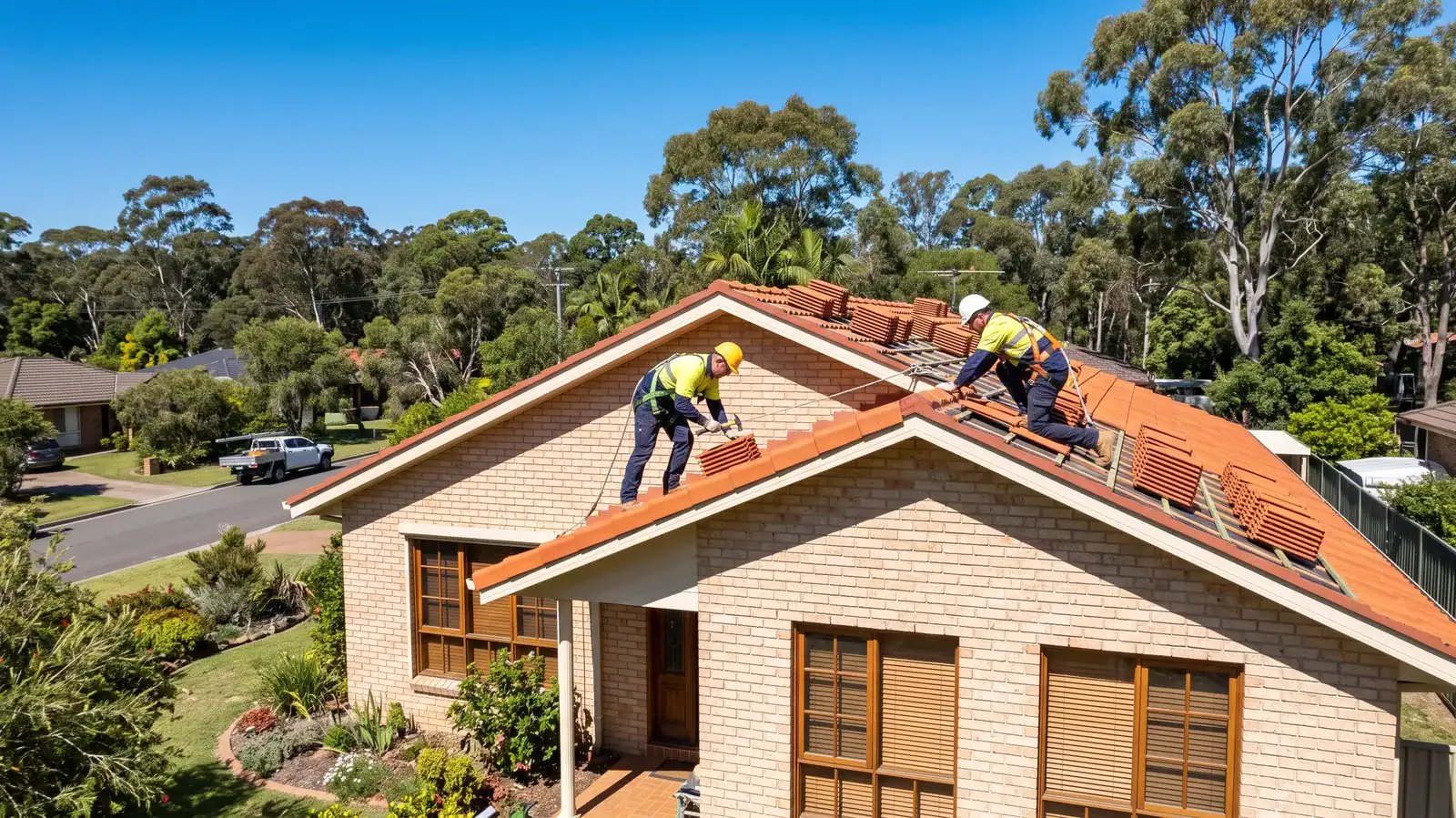
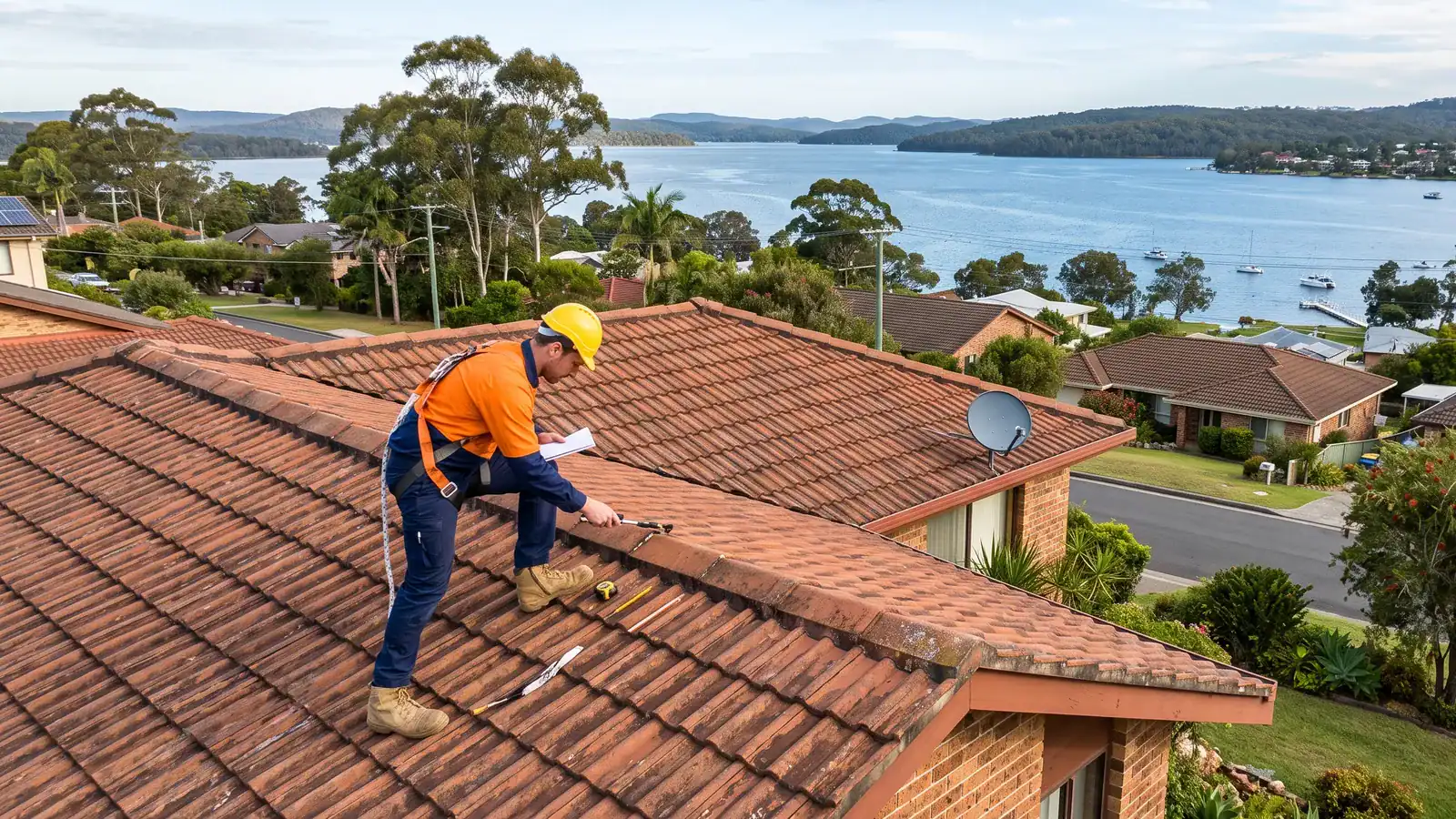
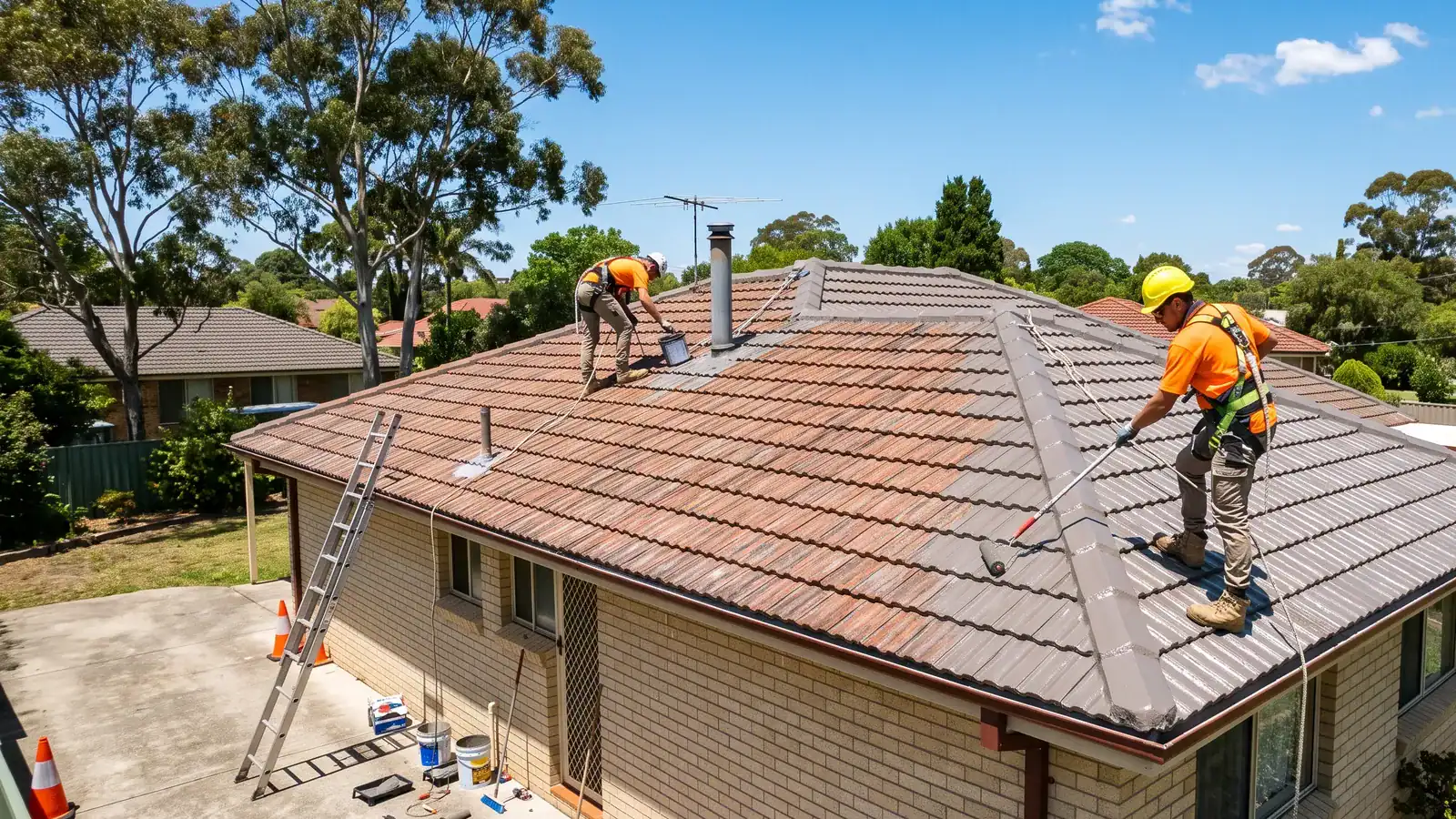
Roof tile paint protects concrete tiles from moisture, UV damage, and moss growth while giving your home a fresh look that lasts 10 to 15 years.
If your roof has lost its colour or the old paint is starting to lift, acting before the damage spreads keeps the cost down and the job straightforward.
Choosing the right roof tile paint matters more than most homeowners realise. The wrong product peels within a couple of years, traps moisture in the tiles, and ends up costing twice as much to strip back and redo.
This guide covers which paint types work on concrete and terracotta tiles, how preparation affects the result, what you should expect to pay in NSW, and why cutting corners on product quality is a false economy. If your roof needs more than a repaint, our breakdown of what roof restoration actually involves explains the difference.
Types of Roof Tile Paint for Your Home
Not all roof tile paint is the same. The type you need depends on whether your tiles are concrete, terracotta, or a cement-based composite. Here is what is available in Australia.
- Acrylic roof membranes are the most common choice for concrete tiles. They are water-based, flexible enough to handle thermal expansion, and resist UV fading well in coastal climates like the Central Coast. Salt air and humidity near the coast break down cheaper acrylics faster, so a product rated for coastal conditions is worth the extra cost
- Elastomeric coatings stretch more than standard acrylics. They bridge hairline cracks in older tiles and provide a thicker waterproof barrier
- Solvent-based roof paints offer strong adhesion on tricky surfaces but have higher VOC levels. Most residential jobs use water-based products instead
- Terracotta sealers are not paint. Genuine terracotta tiles should be sealed and cleaned rather than painted, because paint can trap moisture and cause the clay to deteriorate
Quality brands commonly used on Central Coast roofs include Dulux AcraTex, Shieldcoat Roofbond, and Wattyl Solagard. Your roofer can recommend the right product for your tile type and roof condition.
Roof Tile Paint on Concrete vs Terracotta
Concrete and terracotta tiles respond to paint very differently. Getting this wrong is one of the most expensive roofing mistakes a homeowner can make.
| Factor | Concrete Tiles | Terracotta Tiles |
|---|---|---|
| Can you paint them? | Yes, ideal candidates | Generally not recommended |
| Best coating | Acrylic membrane or elastomeric | Clear sealer only |
| Recoat cycle | Every 10 to 15 years | Sealer every 8 to 12 years |
| Prep needed | Pressure wash, prime, two coats | Pressure wash, replace broken tiles |
| Moisture risk | Low with breathable paint | High if painted over with film-forming products |
| Cost per sqm | $20 to $45 | $35 to $55 (restoration, not painting) |
If you have terracotta tiles that look faded, a professional pressure clean often brings back 80% of the original colour without any coating at all. Roof pressure cleaning is the right starting point for terracotta.
When terracotta is painted with a film-forming product, moisture gets trapped in the clay and the paint delaminates after a summer or two of expansion. At that point you need tile replacements, not a repaint. If your terracotta just needs protection, roof sealing is usually the better investment.
How Roof Tile Paint Is Applied Step by Step
Preparation is where the real work happens. A paint job is only as good as the surface underneath it. Skip a step and the coating will fail within a few years.
- Roof inspection to identify cracked, broken, or loose tiles. These are repaired or replaced before any coating goes on
- High-pressure cleaning at 3,000 to 4,000 PSI to strip away dirt, moss, lichen, and old flaking paint
- Drying time of at least 24 to 48 hours. Painting over damp tiles guarantees adhesion failure
- Primer application using a product matched to the tile type. The primer bonds to the bare tile and gives the topcoat something to grip
- First coat of roof membrane applied by airless spray for even coverage. Rollers are used on ridges and edges
- Second coat once the first has dried (usually the next day). Two coats is the minimum for warranty-grade work
David at All Pro Roofing does this work himself rather than sending subcontractors. With 30 years of experience, he can spot problems during the wash that save homeowners money on roof repairs down the track.
Timing matters too. On the Central Coast, autumn and early spring are your best windows because tiles stay damp in winter and summer heat past 35°C dries paint too fast.
The pre-paint clean is just as important. Leftover dirt and moss stop the primer from gripping, which is why professional roof cleaning before painting determines how long the new coating holds.
What Roof Tile Paint Costs in NSW
Pricing depends on roof size, tile condition, pitch, access, and the product used. Here is what NSW homeowners can expect for a full preparation and two-coat system.
- Standard concrete tile roof (150 to 180 sqm, single storey): $4,500 to $8,000
- Larger or steep-pitch roofs (200+ sqm, two storey): $8,000 to $12,000
- Budget paints vs premium membranes: cheap paint saves $1,000 upfront but typically needs recoating in 5 years instead of 12 to 15
- Terracotta restoration (clean, repair, seal): $5,000 to $9,000 depending on tile condition
Be wary of quotes that seem too low. If someone is quoting $2,000 for a full roof paint, they are either skipping preparation, using one coat, or using bottom-shelf product.
Check they hold a valid NSW contractor licence through NSW Fair Trading. For a broader cost breakdown, see our guide to how much roof restoration costs in NSW.
All Pro Roofing provides free roofing quotes across the Central Coast, Newcastle, Hunter Valley, Lake Macquarie, and Port Stephens.
Signs Your Roof Tiles Need Repainting
Most homeowners do not think about their roof until something goes wrong. By then, a small repaint job has often grown into a full restoration.
- Colour fading that is uneven across the roof, especially on north-facing sections that cop the most sun
- Paint peeling or flaking in patches, exposing bare concrete underneath
- Moss, lichen, or black mould taking hold, which means the existing coating has lost its protective properties
- Water pooling or absorption where tiles darken when wet and take hours to dry, indicating the waterproof layer has broken down
- Your roof is over 10 years old and has not been recoated since the last paint job
Catching these signs early saves money. A repaint costs far less than a full roof restoration that includes tile replacement, rebedding, and repointing on top of the paint work.
Once the new paint is on, keep it in good shape. Clear gutters regularly, trim branches that shade the roof and drop leaf litter, and have the roof cleaned every 3 to 5 years before moss gets a foothold. A proper roof maintenance routine stretches the life of every paint job.
DIY vs Professional Roof Tile Paint Jobs
You can buy roof tile paint from Bunnings. That does not mean you should paint your own roof. Here is an honest comparison.
| Factor | DIY | Professional |
|---|---|---|
| Cost | $500 to $1,500 in materials | $4,500 to $8,000 all-in |
| Equipment | Consumer pressure washer, roller, ladder | Professional 4,000 PSI washer, airless sprayer, harness |
| Safety | High fall risk without harness or anchor points | Licensed, insured, compliant with SafeWork NSW height regulations |
| Warranty | None on labour, limited on paint | Labour and product warranty from licensed operator |
| Lifespan | 3 to 5 years typical | 10 to 15 years with premium product |
| Finish quality | Roller marks, uneven coverage | Spray-applied, consistent film thickness |
Falls from roofs are one of the leading causes of serious injury in Australian homes. SafeWork NSW requires anyone working above 2 metres to use proper fall protection.
For most homeowners, the maths favours a professional job. Professional roof painting lasts three times longer, comes with a warranty, and does not put you at risk on a wet tile surface at height. If you are comparing tradespeople, our checklist on how to choose roof painters you can trust covers what to look for.
Choosing the Right Roof Tile Paint Colour
Colour is not just cosmetic. Lighter roof colours reflect more heat and can reduce cooling costs in summer. Darker colours absorb heat, which is fine in cooler climates but adds to energy bills on the Central Coast.
- Light grey, off-white, and sandstone reflect heat and suit coastal homes. They also hide dirt better than pure white
- Charcoal and dark grey give a modern look but absorb significantly more heat. Best paired with good roof ventilation
- Heritage greens, reds, and terracotta tones work well on older homes and in heritage overlay areas
- Colorbond colour matching is available if you want your tiles to match existing metal roofing or gutters
Most paint suppliers offer colour charts with samples. Ask your roofer to apply a test patch on a few tiles before committing to the full roof. Colours look different on a small swatch versus 150 square metres in direct sunlight.
Roof Tile Paint FAQ
Is painting a tile roof a good idea?
For concrete tiles, yes. A quality acrylic membrane or elastomeric coating keeps moisture, UV, and moss off the tiles for 10 to 15 years and freshens up the look of your home. Terracotta tiles should be sealed and cleaned rather than painted.
What paint do you use on roof tiles?
Most professional roofers use acrylic roof membranes on concrete tiles, with Dulux AcraTex, Shieldcoat Roofbond, and Wattyl Solagard being popular in NSW. Elastomeric coatings suit older roofs with hairline cracks. For terracotta, a clear sealer is the right product.
What are the disadvantages of roof paint?
It needs recoating every 10 to 15 years with professional products, or every 3 to 5 years with budget paint. Poor preparation causes early peeling, and painting terracotta tiles with the wrong product traps moisture and speeds up tile damage. Professional jobs run $4,500 to $12,000 depending on roof size.
Can terracotta roof tiles be painted?
Technically yes, but you probably should not. Terracotta is porous clay that breathes naturally, and a film-forming coating traps moisture inside the tile, causing delamination and spalling. A professional pressure clean brings back most of the original colour without the risk.
How much does roof tile painting cost?
A standard single-storey concrete tile roof (150 to 180 sqm) in NSW runs $4,500 to $8,000 fully prepared with two coats. Larger or two-storey roofs cost $8,000 to $12,000, and terracotta restoration sits between $5,000 and $9,000. Contact a local roofer for an accurate quote based on your roof’s condition.
How long does roof tile paint last?
A professionally sprayed acrylic membrane or elastomeric coating on concrete tiles lasts 10 to 15 years. A DIY roller job with off-the-shelf paint typically lasts 3 to 5 years. The gap comes down to product quality, surface preparation, and application method.
Get Your Roof Tile Paint Assessment
Every roof is different. Tile condition, existing coatings, pitch, and access all affect what product to use and how much the job will cost. The only way to get an accurate answer is a proper on-site inspection.
David at All Pro Roofing has been restoring roofs across the Central Coast and Newcastle since 2005. He is owner-operated, fully licensed (NSW contractor licence 178790c), and does the work himself.
- Roof painting Central Coast
- Roof painting Newcastle
- Roof restoration Central Coast
- Roof restoration Newcastle
Contact All Pro Roofing for a free quote and professional roof assessment. Call or request a free roofing quote online.
Prefer to revive your existing roof? Ask about a metal roof restoration, a clean and recoat that brings a tired metal roof back to life. Get a free quote.