A full roof restoration repairs and renews an existing roof that is suitable to keep. It usually combines inspection, repairs, cleaning and a coating system selected for the roof material.
Residential roofs on the Central Coast and in Newcastle face salt air, sun and heavy rain. Tiles can crack, coatings fade, and ridge capping loosen, but age alone does not tell you whether restoration is worthwhile.
This article covers what the process involves, how it differs between tile and metal roofs, and what to ask before agreeing to a quote.
What Is Roof Restoration?
Roof restoration combines maintenance and repairs on your existing roof. It retains serviceable tiles or sheets rather than replacing the entire roof covering.
The goal is to repair defects and protect serviceable roofing from further weathering. The scope depends on what the inspection finds:
- Replace cracked, broken or displaced tiles and defective metal roof fixings.
- Remove moss, lichen, dirt and unsound coatings.
- Rebed loose ridge caps and repoint where needed on tiled roofs.
- Prepare and coat suitable surfaces with compatible products.
- Check completed repairs, drainage paths and the finish before handover.
A fresh finish can improve the home’s appearance, but paint alone cannot repair a leak or strengthen failing roof materials. For homeowners considering roof restoration in Newcastle, the first question is whether the existing roof is worth retaining.
The Roof Restoration Process Step by Step
Every restoration follows a general sequence, with the repair and preparation work tailored to the roof. Ask for these stages to appear in the written quote so you can compare what each roofer includes.
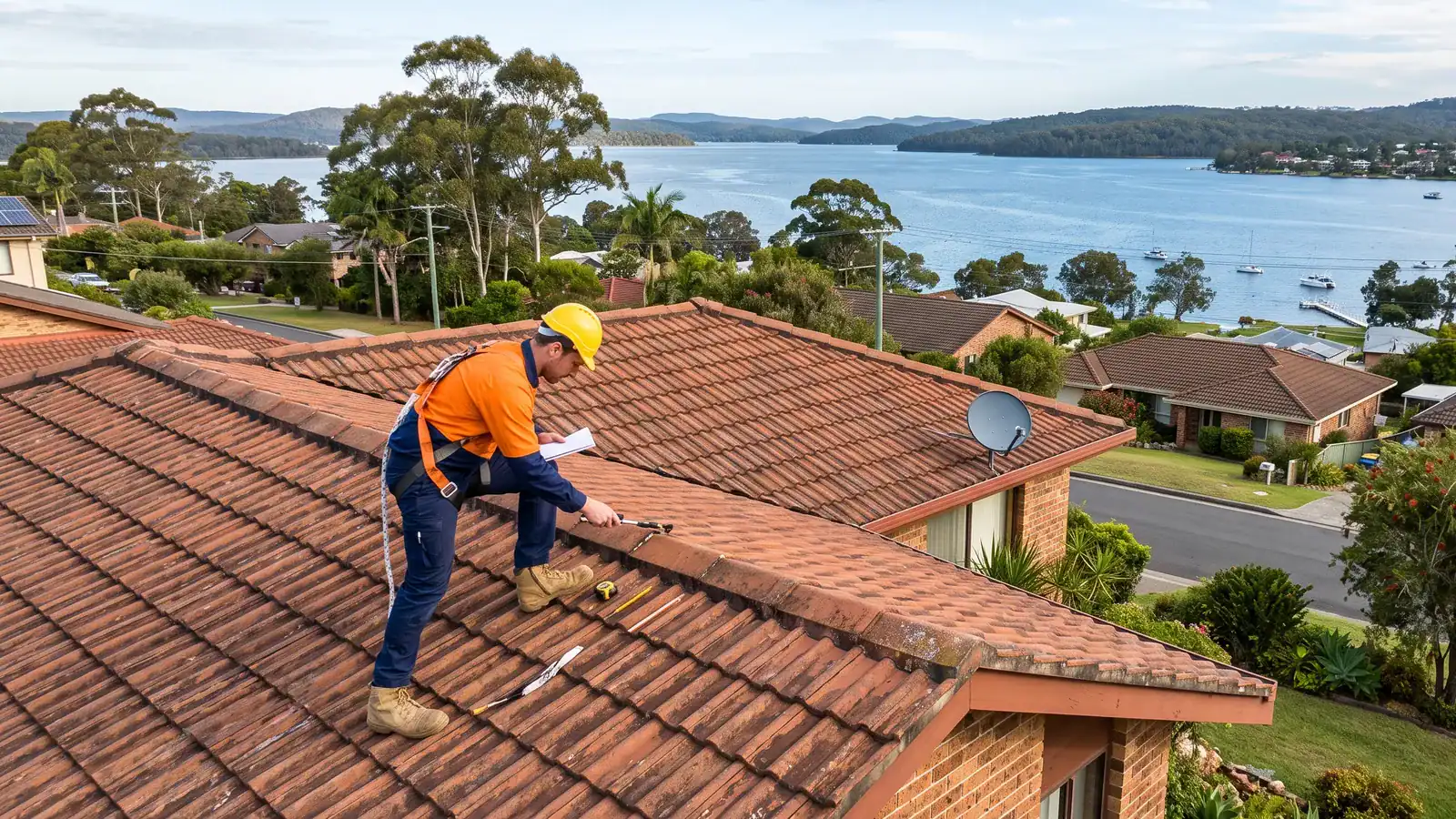
- Inspection. A licensed roofer checks the roof surface, ridge capping, flashings, valleys and gutters. Leaks, suspect materials and signs of movement need investigation before coating is considered.
- Repairs. Broken tiles, defective fixings and damaged flashings are repaired or replaced as needed. Any problems that make cleaning unsafe or allow water inside should be addressed first.
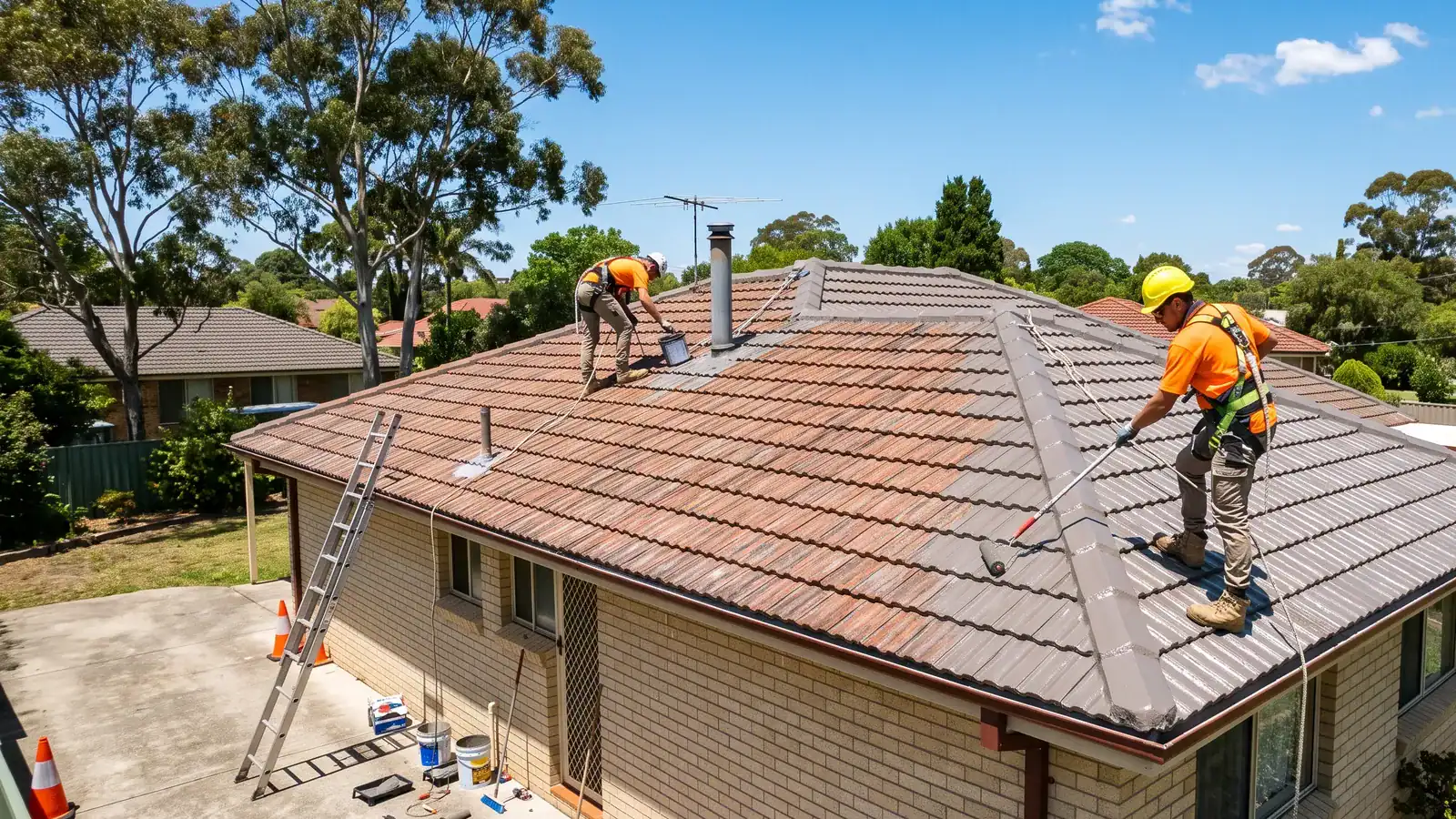
- Cleaning. Professional roof cleaning before recoating removes contamination and loose paint. The method must suit the material and its condition, with runoff managed and the surface allowed to dry.
- Ridge capping. Rebedding resets loose ridge caps in mortar; repointing renews the exposed joints with flexible pointing compound. Repairing damaged ridge pointing addresses a different defect from faded paint.
- Priming and coating. The roofer selects a compatible sealer or primer and applies the specified membrane system. The roof tile paint and membrane options depend on the underlying tile and any existing coating.
- Final inspection. The roofer checks repairs, coating coverage and site cleanup, then explains maintenance and warranty paperwork. Ask to see photographs of repaired areas you cannot inspect from the ground.
Dulux’s roof application guide specifies different systems for concrete tiles, terracotta and metal, including coating requirements that vary by system. There is no single preparation recipe for every roof.
What changes with the roof material?
- Concrete tiles: preparation depends on whether the surface is powdery, pitted or previously painted.
- Terracotta: sound tiles need a compatible terracotta system; crumbling tiles are unsuitable for coating.
- Colorbond and Zincalume: existing finish, corrosion and sheet condition determine the preparation and coating choice.
If the main issue is surface contamination, professional roof cleaning in Newcastle may be the appropriate service after inspection. A sound roof does not automatically need a full restoration because it looks dirty.
Roof Restoration vs Roof Replacement
Not every roof can be restored. Widespread deterioration or damaged supporting timbers calls for a separate assessment of whether your roof needs full replacement.
For a structurally sound roof, compare restoration with targeted repairs as well as replacement. Paying to coat a roof that still needs major repairs is poor value.
| Question | Restoration | Replacement |
|---|---|---|
| What stays? | Serviceable existing roof covering | Existing covering is removed in the agreed scope |
| What does it address? | Repairable defects, preparation and suitable recoating | Widespread covering failure; structural work must be separately assessed and specified |
| What affects disruption? | Cleaning, repair work, access and drying time | Removal, weather protection, deliveries and installation |
| How should costs be compared? | Check repairs and coating inclusions | Check removal, disposal and any structural inclusions |
A licensed roofer can explain which option makes sense after inspecting the roof. Ask what condition the materials will be in after the proposed work, rather than choosing on the lowest price alone.
How Long Does a Roof Restoration Last?
A restored roof has no universal expiry date. Its remaining life depends on the original materials, repair quality, preparation, weather exposure and upkeep.
- A coating warranty is different from a promise about the whole roof’s lifespan.
- Existing paint and substrate condition can affect warranty eligibility.
- Maintenance obligations and exclusions matter as much as the advertised warranty period.
Dulux describes warranties of up to 15 years for eligible roof membrane products, subject to the applicable system and terms. That is not a guarantee that every restored roof will remain leak-free for that period.
The Dulux residential material warranty excludes previously painted substrates, faulty workmanship and colour fade. Ask the roofer to confirm eligibility for your roof in writing, especially if it has been repainted before.
If you are weighing up the investment, the full cost breakdown for roof restoration explains how roof size, pitch, access, condition and materials affect the quote.
Signs Your Roof Needs Restoration
Visible damage or a new leak warrants an inspection, although a local repair may be enough:
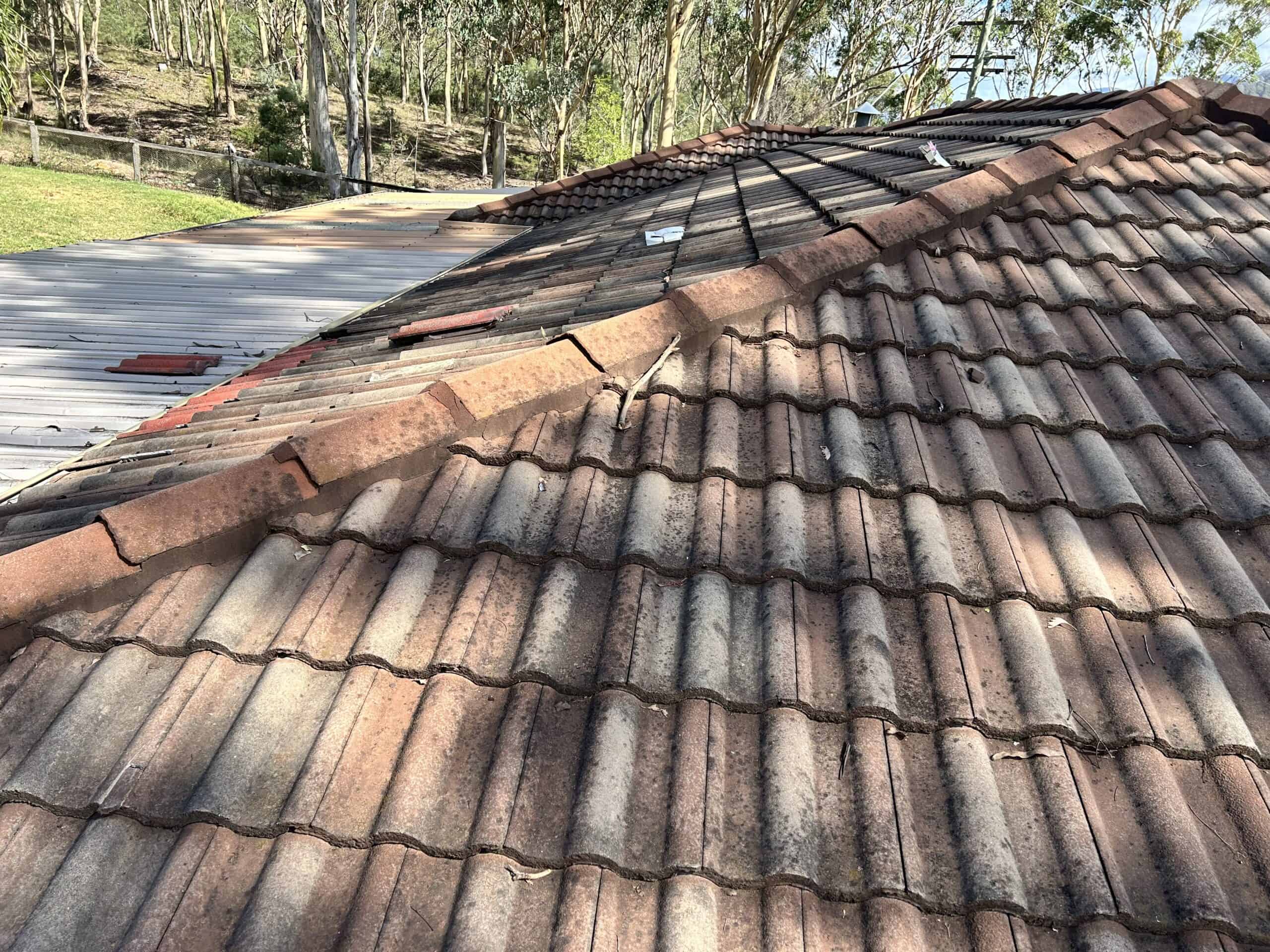
- Cracked, chipped or displaced tiles visible from the ground
- Ridge capping mortar crumbling or missing in sections
- Faded or peeling coatings on older tile roofs exposed to coastal weather
- Water stains on ceilings after rain
- Moss or lichen spreading across the roof
- Rusted fixings or patches of corrosion on metal sheets
Arrange repairs for active roof leaks promptly rather than waiting for a cosmetic makeover. Homeowners needing roof repairs in Newcastle can have the leak assessed before deciding whether wider restoration is justified.
Maintaining Your Roof After Restoration
A restored roof still needs upkeep. Request a maintenance schedule that suits your roof, nearby trees and exposure, and keep the handover documents for future inspections.
- Keep gutters clear. Arrange professional roof gutter cleaning when debris accumulates; leaf guard installation can reduce leaf entry but does not remove the need for checks.
- Manage overhanging branches. Have branches that scrape the roof or drop heavy debris assessed for trimming.
- Address new growth. Have moss or lichen returning in shaded or humid sections assessed before attempting to clean it yourself.
- Watch for changes. Check from the ground after storms and arrange a roofer’s inspection if you notice new damage or a leak.
The roof maintenance guide for Australian homeowners covers seasonal checks between professional inspections. Avoid walking on the roof to investigate a problem.
What to Look for in a Roof Restoration Company
A useful quote explains the work and its limits. Ask who will do the job and how unexpected damage discovered during preparation will be handled.
- Check the contractor’s licence and authorised work through the Service NSW licence checker.
- Ask for evidence of insurance relevant to the work.
- Expect an inspection before the final scope and price are agreed.
- Get the repair items, products, preparation and coating requirements in writing.
- Separate the roofer’s workmanship warranty from any manufacturer material warranty.
- Ask how applicable building requirements and any necessary approvals will be addressed.
All Pro Roof Restoration holds NSW Fair Trading licence 178790c, is a member of the Housing Industry Association and is Dulux Accredited. Owner David has over 30 years of experience and does the roofing work himself.
Frequently Asked Questions
Scope and timing
Can any roof be restored?
No, the existing materials must be suitable to retain. Suspected asbestos needs specialist assessment: SafeWork NSW warns against pressure cleaning asbestos roofs, so the standard process described here is unsuitable.
How long does a roof restoration take?
The roofer should estimate how long the work will take after inspecting the roof. Repairs, roof area, safe access, drying times and rain can all change the completion date.
Can I stay in the house during a roof restoration?
Staying home may be possible, but confirm access restrictions with the roofer. Plan for noise, cleaning activity and any precautions around doors, windows, pets and outdoor belongings.
Should I paint my roof or restore it?
Repainting a sound roof focuses on its surface finish. A quote for roof painting on the Central Coast should still explain preparation and any repairs needed before paint is applied.
Can you restore a metal or Colorbond roof?
Often, if the sheets remain sound and corrosion can be dealt with. A metal roof showing rust or fading needs assessment before a coating system is chosen.
Costs, coatings and warranties
Is roof restoration worth the cost?
Roof restoration can be worthwhile when it preserves serviceable roofing and addresses identified defects. Compare the proposed work with targeted repairs and replacement, rather than assuming restoration always offers the best value.
How much does roof restoration cost on the Central Coast?
Price depends on roof size, pitch, condition, material and access. Request a free quote that lists repairs, coating work and any solar or access costs separately.
What coating products do you use?
All Pro uses Dulux Acratex roof coatings, with the system selected to suit the surface. Ask for the product names and specification in your quote.
Do solar panels need to be removed?
That depends on the access and work required beneath them. Agree on the scope in advance and have any electrical disconnection or reconnection handled by a licensed electrician.
What warranty should I expect?
Ask for written workmanship terms and any applicable manufacturer warranty. Accreditation alone does not establish eligibility; the roof condition, specified system and exclusions must be checked.
Roof Restoration for Central Coast and Newcastle Homes
All Pro has restored residential roofs since 2005. David assesses tile and metal roofs individually, whether he is restoring a roof in Gosford or assessing a roof restoration in Maitland.
- Roof restoration for Central Coast homes
- Roof restoration across the Hunter Valley
- Roof restoration around Lake Macquarie
- Roof restoration in Port Stephens
Want to know if your roof needs restoration? Request a free roof restoration quote and an assessment of the work your roof needs.