Salt air actively breaks down roof paint on Newcastle homes, and the damage starts before you notice it.
If you live anywhere within a few kilometres of the Newcastle coastline, your roof cops a daily dose of airborne salt. That salt settles on your roof surface, draws in moisture, and starts eating through paint layers from the outside in.
This article covers exactly how salt air breaks down roof paint, what signs to watch for, which coatings actually hold up in coastal conditions, and how to keep your roof protected long term.
Considering roof painting in Newcastle? Choosing the right coating and applicator makes the difference between a 5-year repaint and a 15-year one.
How Salt Air Attacks Roof Paint in Coastal Areas
Salt doesn’t just sit on your roof. Tiny crystals land on the surface, absorb moisture from the humid coastal air, and form a thin saline film. That film creates miniature corrosion cells that eat into the coating from the outside.
On painted surfaces, salt works into micro-cracks and lifts the paint from the substrate. The cycle repeats with every sea breeze.
- Metal roofs cop the worst of it. Salt triggers oxidation beneath the paint layer, causing rust to spread under the coating where you can’t see it
- Tile roofs absorb salt into their porous surface, which breaks down glazing and causes spalling over time
- UV radiation compounds the problem by degrading paint binders, which makes the coating even more vulnerable to salt penetration
- Wind-driven abrasion from sand and salt particles physically scours the paint surface, thinning the protective layer
Newcastle’s north-east sea breeze pushes salt air several kilometres inland. According to AS/NZS 2312 corrosion zone classifications, homes within 1 km of breaking surf sit in a high-corrosivity environment, and salt effects can reach 10 km or more inland depending on wind patterns and topography.
Suburbs like Merewether, Bar Beach, Stockton, and Newcastle East face the ocean directly and cop the heaviest salt loads. Further west, Lambton, Wallsend, and Maryland still catch salt on the prevailing breeze, but exposure drops with distance and natural shielding.
Salt spray and coastal humidity also speed up moss and algae growth on Newcastle roofs, which traps moisture against the paint and accelerates coating breakdown.
Signs Salt Air Is Damaging Your Roof Paint
Most homeowners don’t notice salt damage until it’s well advanced. Here’s what to watch for, roughly in order of severity.
- White chalky residue. Run your hand across the painted surface. If it comes away with a powdery white film, the paint binder is breaking down. This is the earliest warning sign.
- Fading and discolouration. Salt and UV together strip colour pigments faster than either one alone. If your roof looks washed out compared to three years ago, the coating is losing its integrity.
- Bubbling or blistering. Moisture trapped beneath the paint layer causes bubbles. On coastal roofs, this usually means salt has penetrated through micro-cracks.
- Flaking and peeling. Once adhesion fails, paint comes off in sheets. At this point, the bare substrate is exposed to direct salt attack.
- Rust spots on metal roofs. Orange or brown streaks appearing through the paint mean corrosion has started underneath. This needs attention before it spreads.
If you’re seeing rust spots or peeling paint on your Newcastle roof, get a professional assessment before the damage spreads further. Early intervention can save thousands in replacement costs.
Which Roof Paint Types Handle Salt Air Best
Not all roof paints are built for coastal conditions. Standard exterior paint might last 8 to 10 years inland, but the same product on a Newcastle rooftop can start failing within 3 to 5 years.
Acrylic Membrane Coatings
Full acrylic elastomeric membranes like Dulux Acratex are the go-to for coastal roof restoration around Newcastle and the Central Coast. These coatings flex with temperature changes instead of cracking, which stops salt from working into gaps. The Dulux Acratex system carries a 15-year product performance warranty.
Marine-Grade Coatings
For homes right on the waterfront, marine-grade formulations offer the highest salt resistance. These products use specialised corrosion inhibitors that form a passivation layer on metal surfaces, blocking the electrochemical process that causes rust.
| Coating Type | Salt Resistance | Typical Lifespan (Coastal) | Best For |
|---|---|---|---|
| Standard acrylic | Low to moderate | 3 to 5 years | Sheltered inland areas |
| Elastomeric membrane (e.g. Dulux Acratex) | High | 10 to 15 years | Most coastal homes within 1 to 10 km of coast |
| Marine-grade | Very high | 10 to 15+ years | Waterfront and severe exposure |
| PVDF / Colorbond Ultra | Very high | 20 to 30+ years | New metal roofing in severe salt zones |
All Pro Roof Restoration is a Dulux Accredited applicator, meaning the Acratex system is applied to the manufacturer’s spec. That’s what activates the 15-year warranty. A backyard job without proper prep won’t carry that guarantee.
Why Surface Prep Matters More on Coastal Roofs
You can use the best roof paint available, but without proper surface prep, salt will find a way underneath. Coastal roofs need extra steps that inland jobs can skip.
- Double wash. The first high-pressure wash removes dirt, mould, and loose paint. The second wash lifts embedded salt crystals and rinses them away. One wash isn’t enough on a coastal roof.
- Rust treatment. Any corrosion on metal roofs needs treating with a rust converter before priming. Painting over rust just traps the problem.
- Specialist primer. Coastal roofs need primers with zinc phosphate or similar corrosion inhibitors, creating a chemical barrier between metal and salt.
- Crack and gap sealing. Every gap around flashings, ridge caps, and penetrations gets sealed. Salt air finds the smallest opening.
David at All Pro has been restoring roofs on the Central Coast and Newcastle for over 30 years. He does the prep work himself rather than sending subcontractors, which is why the roof painting results last. It’s a detail-oriented job, especially near the coast.
How Salt Affects Tile Roofs Differently to Metal
Homeowners sometimes assume tile roofs are immune to salt damage because they don’t rust. Salt affects tile and metal roofs through different mechanisms, and both need coating protection.
- Concrete tiles are porous. Salt soaks in and causes efflorescence, that white crystalline staining you see on older coastal roofs. Over time, salt expansion causes surface crumbling.
- Terracotta tiles resist salt better thanks to their fired clay, but their glazing can still degrade. Unglazed terracotta absorbs moisture and salt, leading to spalling.
- Metal roofing (Colorbond, Zincalume, or older galvanised steel) corrodes when salt breaches the coating. Corrosion spreads laterally under the paint, causing large sections to fail at once.
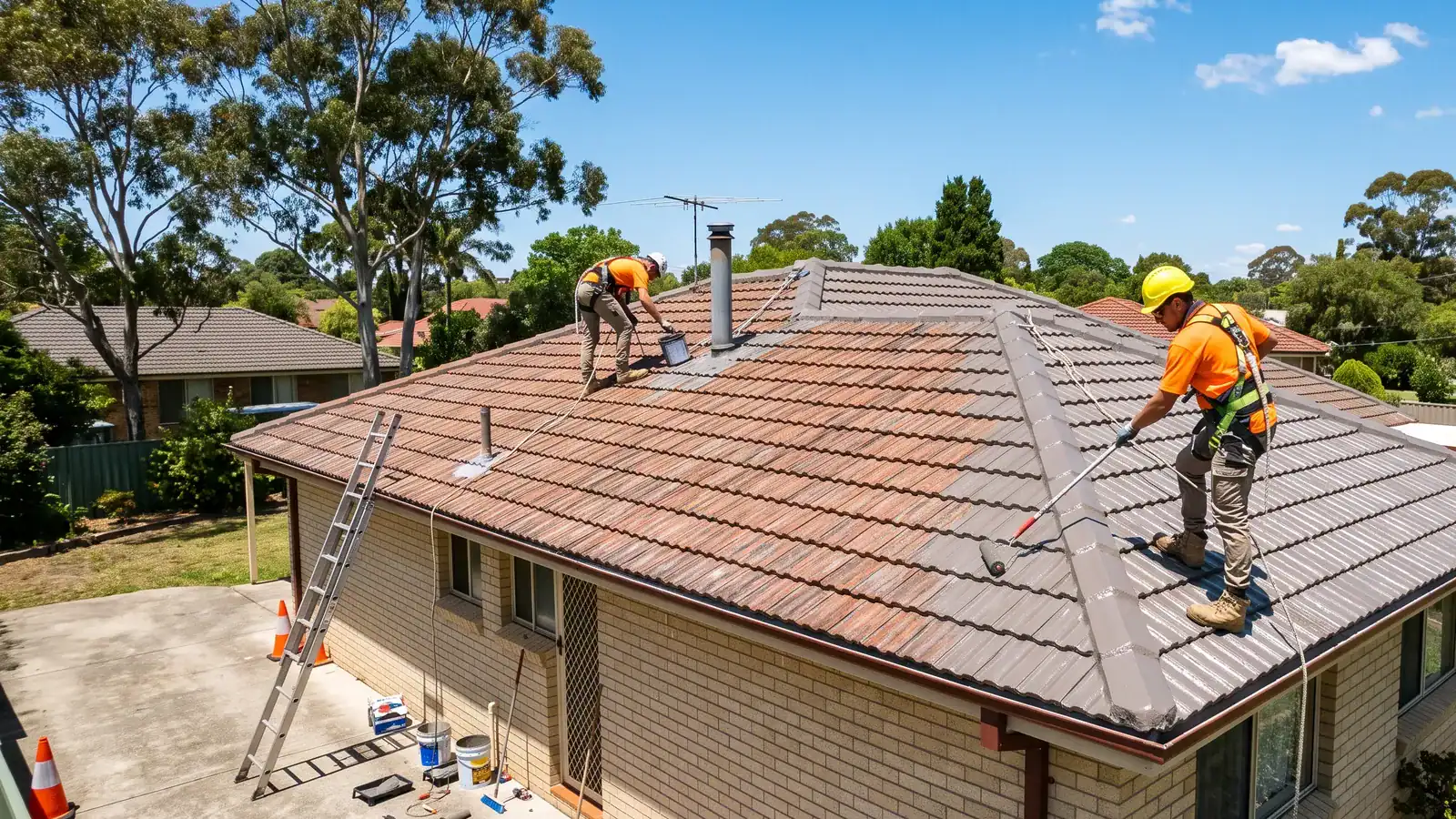
The fix is similar for both. A proper roof restoration includes cleaning, sealing, priming, and a durable topcoat rated for coastal exposure. For metal roofs with rust damage, roof repairs should happen before any painting.
If your tile roof is showing fading, white salt staining, and hairline cracks at the same time, that combination is common in coastal Newcastle. Read more about why older Newcastle tile roofs fade and crack to work out whether recoating or a full restoration makes more sense.
Maintaining Your Roof Paint in a Salt Environment
Even the best coastal roof coating needs maintenance. A simple routine extends the life of your paint significantly.
- Rinse with fresh water every 3 to 6 months. A garden hose from ground level is enough for most single-storey homes. The goal is to wash off accumulated salt before it can attack the coating.
- Inspect after storms. Strong winds drive heavier salt loads onto your roof. Check for chips, blistering, or debris damage. Catching a small chip early stops it becoming a rust patch.
- Keep gutters clear. Blocked gutters cause water to pool on the roof edge, and standing saltwater on a painted surface is worse than spray.
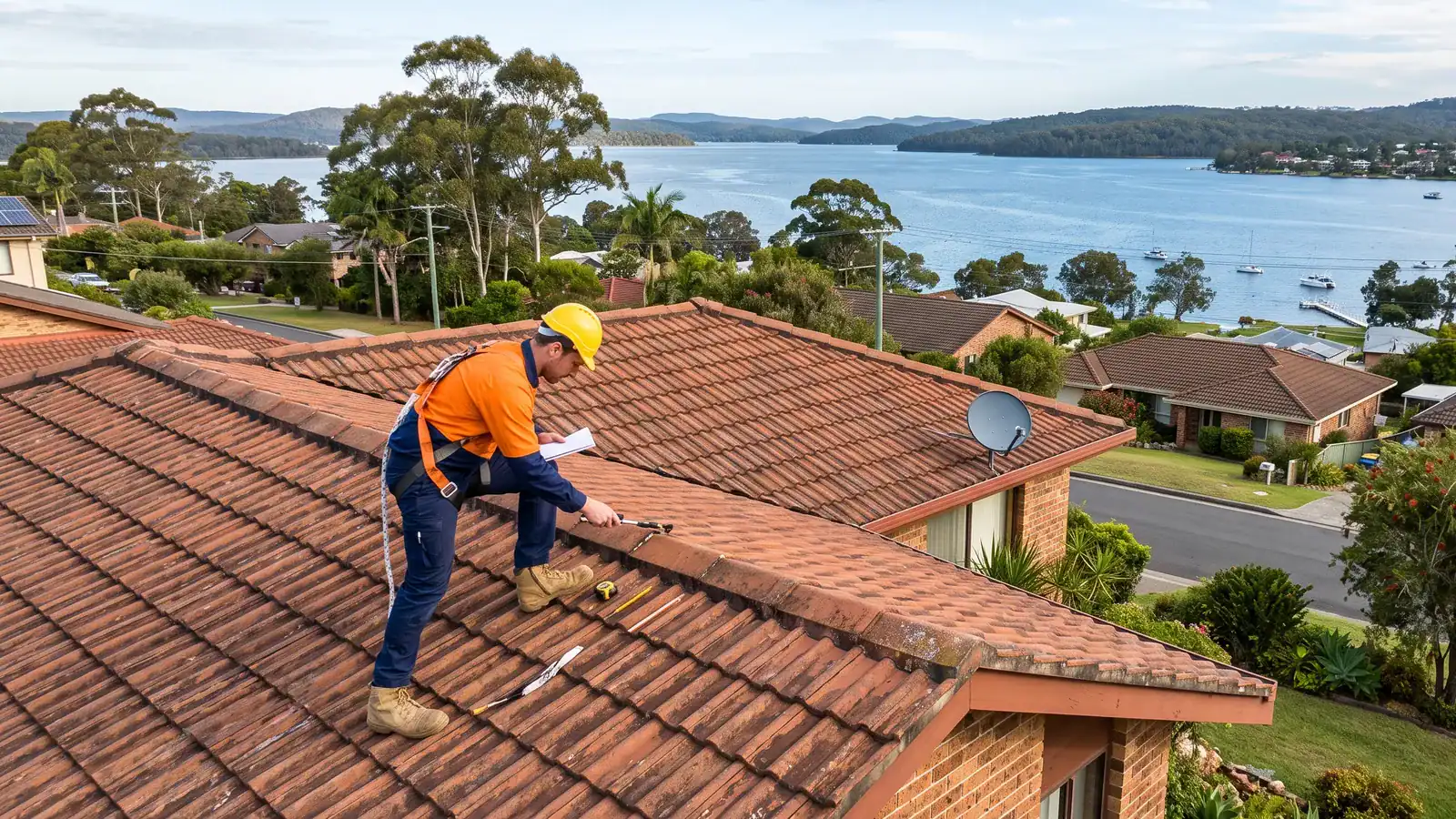
- Schedule a professional check every 3 to 5 years. A roofer can spot early coating failure from up on the roof that you’d miss from the ground.
For stubborn salt buildup and grime that a garden hose will not shift, professional roof cleaning in Newcastle removes embedded deposits before they eat into the coating.
Any roofer you hire should carry a current NSW Fair Trading licence (for example, licence 178790c). You can verify a contractor’s licence on the NSW Fair Trading website.
When to Schedule Roof Painting in Coastal Newcastle
Timing matters. The coating needs dry, mild conditions to cure properly, and Newcastle’s weather does not cooperate all year round.
- Autumn (March to May) is the best window. Humidity drops, rain eases, and temperatures sit in the range most coatings need to bond properly.
- Spring (September to November) is the second-best option, though afternoon sea breezes can push heavier salt loads onto freshly coated surfaces.
- Summer brings high UV and heat that can flash-dry the coating before it bonds to the substrate. Extreme heat days are a no-go.
- Winter risks dew, low overnight temperatures, and slow curing. Some coatings will not cure properly below 10°C.
Booking a roof restoration in Newcastle during autumn gives the coating the best chance of lasting the full warranty period.
Common Questions About Roof Paint and Salt Air
How often should you repaint a roof near the coast?
It depends on the coating type and exposure level. Standard acrylic paint might need redoing every 3 to 5 years in coastal Newcastle. A quality elastomeric membrane like Dulux Acratex can last 10 to 15 years with proper preparation and maintenance.
Does salt air affect tile roofs or just metal?
Both. Metal roofs corrode under the paint layer when salt penetrates. Concrete tiles absorb salt and develop efflorescence, while terracotta tiles can lose their glazing. All roof types in coastal areas benefit from protective coatings.
How far from the ocean does salt damage reach?
Further than most people think. Australian Standard AS/NZS 2312 classifies the zone within 1 km of breaking surf as high corrosivity. Salt effects can extend 10 km or more inland depending on wind patterns, and Newcastle’s prevailing north-east breeze pushes salt air well into suburban areas.
Can you paint over a rusty metal roof?
You can, but only after treating the rust properly. All existing corrosion needs to be removed or chemically converted, and a rust-inhibiting primer must be applied before the topcoat. Painting directly over active rust just traps moisture and makes the problem worse.
Should I wash my roof before repainting in a coastal area?
Absolutely, and ideally twice. The first wash removes surface dirt and mould, then after the surface dries, a second wash lifts embedded salt crystals. Skipping this step is the most common reason coastal roof paint fails prematurely.
How do I know if salt is damaging my roof paint?
Look for a chalky white residue when you touch the surface, faded or uneven colour, blistering, or paint that flakes off when scratched. On metal roofs, orange or brown streaks showing through the paint indicate rust has started underneath the coating.
What is the best time of year to paint a roof near the coast?
Autumn (March to May) gives you the best combination of low humidity, mild temperatures, and less rain. Spring works too, but avoid summer heat and winter cold as both interfere with how the coating cures.
How much does roof painting cost in coastal Newcastle?
It depends on roof size, pitch, material, condition, and the coating system. A premium system like Dulux Acratex costs more upfront than a standard acrylic, but it lasts three to four times longer in salt-air conditions. Contact All Pro for a free quote based on your specific roof.
Do Colorbond roofs need repainting in coastal areas?
Pre-finished Colorbond holds up well, but even these finishes degrade over decades of salt exposure. Older Colorbond roofs showing fading or corrosion around screw fixings benefit from a professional repaint. For more detail, read our guide to Colorbond roofing for NSW homes.
Protect Your Newcastle Roof From Salt Damage
Salt air is part of coastal living, and you can’t stop it landing on your roof. What you can control is how well your roof is protected.
- Choose an elastomeric or marine-grade coating rated for coastal exposure
- Insist on double washing and proper priming during preparation
- Rinse with fresh water every 3 to 6 months to prevent salt buildup
- Get a professional inspection every few years to catch early failure
Contact All Pro Roofing for a free quote and professional roof assessment. David has been helping Newcastle and Central Coast homeowners with coastal roof protection for over 30 years.