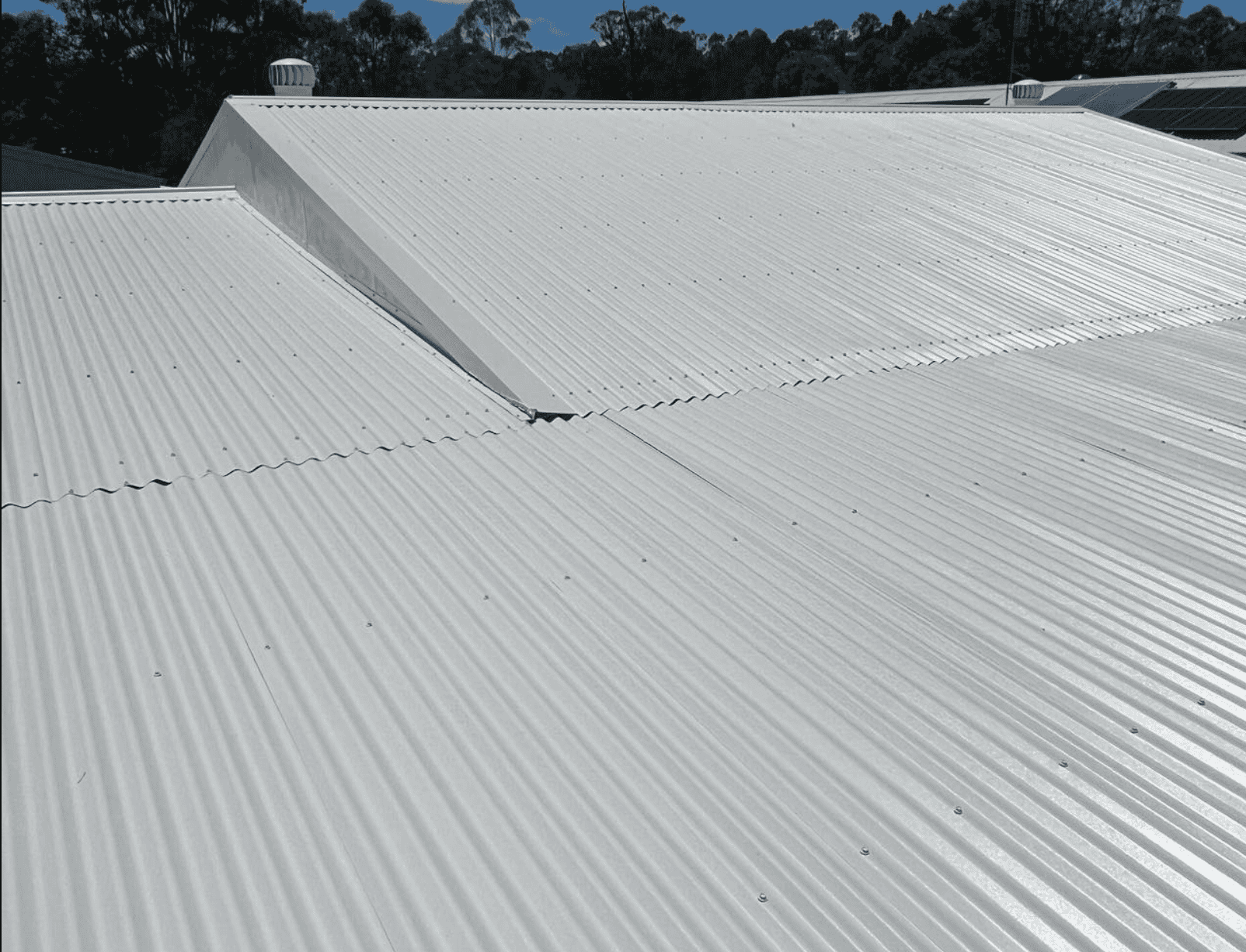
Colorbond roofing is pre-painted steel sheeting made for Australian roofs. The sheet profile, coating grade and details underneath it all affect whether it suits your home.
It starts as structural steel with a metallic coating, pretreatment, primer and baked-on finish. BlueScope explains these five layers of protection in its roofing product guide.
You see it on homes across Newcastle, Lake Macquarie, the Central Coast, the Hunter Valley and Port Stephens. For an older home, the useful question is whether you need new sheets or whether the existing roof can be repaired and recoated.
Colorbond compared to old concrete tile
Many older homes still have concrete tile roofs. If yours is one of them, compare the condition of the whole roof before deciding to change materials.
- Weight. Steel sheeting is substantially lighter than concrete tiles, but a lighter roof still needs properly designed connections and supports.
- Cracking and breakage. Tiles can crack or slip, while steel sheeting can dent or corrode. Neither material is immune to storm damage.
- Lichen and moss. Shaded tiles can hold growth and debris, but metal roofs also need leaves and dirt removed.
- Maintenance. Tile roofs may need ridge repointing and replacement tiles. Metal roofs need attention to fixings, flashings, coatings and drainage.
- Remaining life. A roof inspection is more useful than an age estimate when choosing between repair and replacement.
| Factor | Colorbond steel | Concrete tile |
|---|---|---|
| Structural load | Lighter roof covering | Heavier roof covering |
| Common damage | Dents, corrosion or failed fixings | Cracked or displaced tiles |
| Maintenance focus | Coating, fasteners and flashings | Tiles, ridge bedding and pointing |
| Appearance | Continuous sheets in several profiles | Individual overlapping tiles |
| Service life | Depends on exposure, specification and care | Depends on tile condition and the roof system |
Colour range and the Thermatech advantage
BlueScope lists 22 core roofing colours, with six also available in a Matt finish, in its roofing product guide. Ask for physical samples because a colour on your phone can look quite different in full sunlight.
Surfmist is an option for a lighter roof, while Monument and Woodland Grey offer darker finishes. Basalt and Evening Haze are other options to compare against your brickwork, gutters and window frames before choosing.
BlueScope’s thermal performance guidance says Thermatech solar reflectance technology is included in the core Classic colours except Night Sky, and in the Matt colours. It helps limit solar heat absorption, but indoor comfort also depends on the roof design and insulation.
- Compare solar reflectance as well as colour appearance.
- Ask which colours and finishes are available in the profile and coastal grade you need.
- Plan ceiling and roof insulation alongside the sheet selection.
- Check any applicable colour requirements before ordering.
Steel can be recycled at the end of its service life. When replacing a roof, ask how the removed material will be separated and handled.
Known drawbacks to weigh up
A metal roof can suit an older NSW home well, but the quote needs to cover more than the sheets. These are the trade-offs to discuss before committing.
- Noise in heavy rain. An uninsulated metal roof can be noisy. A suitable roof blanket and ceiling insulation can help, so check exactly what is included.
- Upfront cost. Roof complexity, access and the condition of the structure affect the price. There is no reliable rule that a steel roof always costs more than tile, or pays back the difference through maintenance savings.
- Dent risk from impact. Severe hailstones or falling branches can dent sheeting. A roofer should assess the coating, seams and drainage before calling damage cosmetic.
- Colour fading. The finish can chalk or fade with exposure. A professional roof painting service may restore the finish if the sheets remain sound.
Coating over a leak or badly corroded sheet will not address the underlying fault. Have that assessed before spending money on appearance.
Coastal and bushfire performance
Salt exposure matters on the Central Coast and around Newcastle, but a blanket “Ultra within 500 metres” rule is too broad. BlueScope’s coastal roof selection guidance gives the following simple guide for breaking surf.
- More than 200 metres: standard Colorbond steel is recommended as a starting point.
- Between 100 and 200 metres: Colorbond Ultra is the recommended roof material.
- Closer sites or other marine conditions: ask BlueScope which product suits the site before ordering.
Distances are measured from the high water or tide mark, and local winds and areas sheltered from rain affect performance. A home facing breaking surf at Terrigal needs a different exposure assessment from one beside sheltered water in Lake Macquarie.
Ask the roofer to record the proposed coating grade and the site’s exposure in the quote. A suburb name alone does not establish product suitability or warranty eligibility.
For homes near bushland, BlueScope says Colorbond can form part of a compliant bushfire construction system, including BAL-FZ. The sheets alone do not make a roof or house compliant; the complete design must address the property’s assessed bushfire requirements.
Roofing profiles and changing from tiles
Colorbond is the coated steel, while the profile is the shape formed into it. Two quotes using Colorbond can specify different profiles and fixing systems.
- Corrugated, including CUSTOM ORB: the familiar rounded ripple often chosen for traditional roof shapes.
- TRIMDEK: a ribbed profile with flatter pans between the ribs.
- KLIP-LOK: a concealed-fix profile held with clips, with options suited to low-slope roof designs.
Lysaght’s profile specifications set out slope and support limits for individual products. Ask your roofer to select the exact profile for the measured roof pitch, sheet length and drainage needs.
Pitch can rule out a profile before appearance comes into it. BlueScope’s roof pitch guidance gives a typical minimum of 5 degrees for corrugated sheeting, while some other profiles allow slopes as low as 1 degree.
For example, Lysaght specifies a 2-degree minimum for TRIMDEK roofing. These are product limits, not a guarantee that a profile suits every roof at that pitch; the roofer also needs to check drainage and the installation specifications.
What does Colorbond reroofing involve?
Colorbond reroofing means replacing an existing roof covering with new Colorbond steel sheets. It can involve changing from tiles or replacing an older metal roof, rather than painting the covering already there.
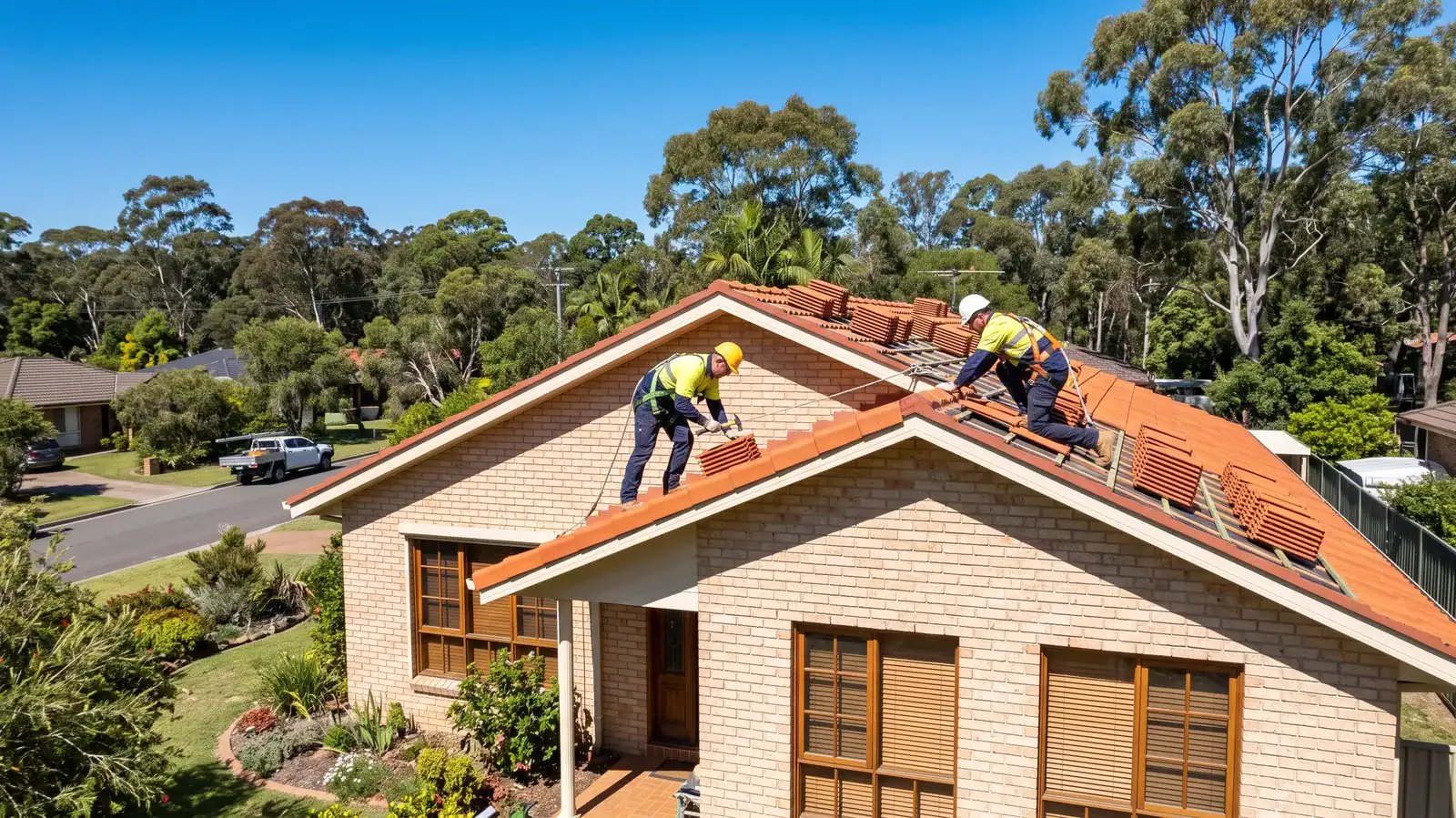
Changing from tile to Colorbond usually involves removing the tiles and checking the roof frame before installing the new covering. The lower weight does not remove the need to check battens and connections for the new system.
- The roofer assesses the existing structure, access and scope of removal.
- The quote identifies any support alterations, insulation and moisture-control layers.
- The crew removes the old covering and installs the specified roof system, flashings and cappings.
- The handover includes cleanup, an inspection and the relevant product and workmanship documents.
Ask how the crew will protect the home if weather interrupts the work, and how discoveries beneath the tiles will be priced. The roof replacement process for a Maitland home gives local homeowners more detail on what to expect.
Maintenance and warranty
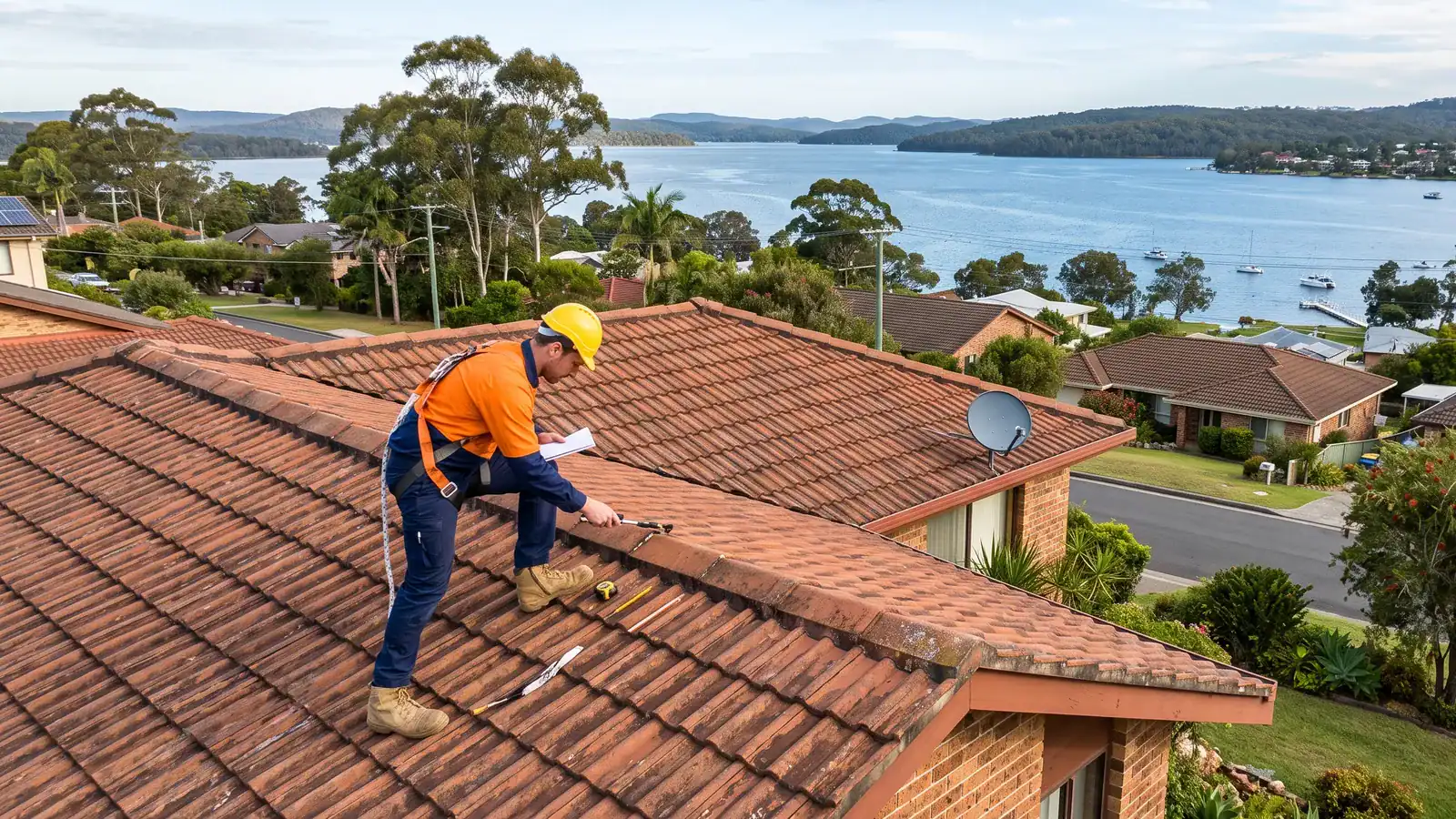
A Colorbond roof still needs routine care, as set out in BlueScope’s cleaning and maintenance guidance. Arrange professional help for inspections or cleaning that require roof access.
- BlueScope recommends washing surfaces not naturally rain-washed at least every six months, and more often near the coast.
- Clear leaves and debris from gutters and valleys.
- Have flashings, fixings and storm damage checked when needed.
- Keep branches clear of the roof and avoid abrasive cleaning methods.
For a deeper clean, professional roof cleaning can help identify an appropriate method for the coating. Agree on the method before work starts rather than assuming high pressure is suitable.
If cleaning alone will not address the condition, a professional roof restoration can include repairs, treatment of suitable surface rust and recoating. Sheets with serious corrosion may need replacement.
BlueScope product warranty terms depend on the product, location and application. Obtain the warranty for your actual roof and keep it separate from the installer’s workmanship warranty.
A maintenance record helps you track changes and keep the product documents together. Regular checks are part of maintaining a metal roof and its drainage.
The three paths for a metal roof
When people ring us about their roof, what they need usually falls into one of three jobs. The condition of the sheets matters more than whether the colour looks tired.
- Replace and re-roof: extensive corrosion or repeated failures across the roof may justify new sheets.
- Restore and recoat: sound sheets with coating wear and repairable faults may be retained.
- Repair specific faults: an isolated flashing leak or damaged section may need a focused repair.
If the tiles are past saving, or the metal roof is corroded and leaking in multiple places, a full Colorbond roof replacement may be appropriate. Local homeowners can discuss Colorbond roof replacement in Newcastle with the team.
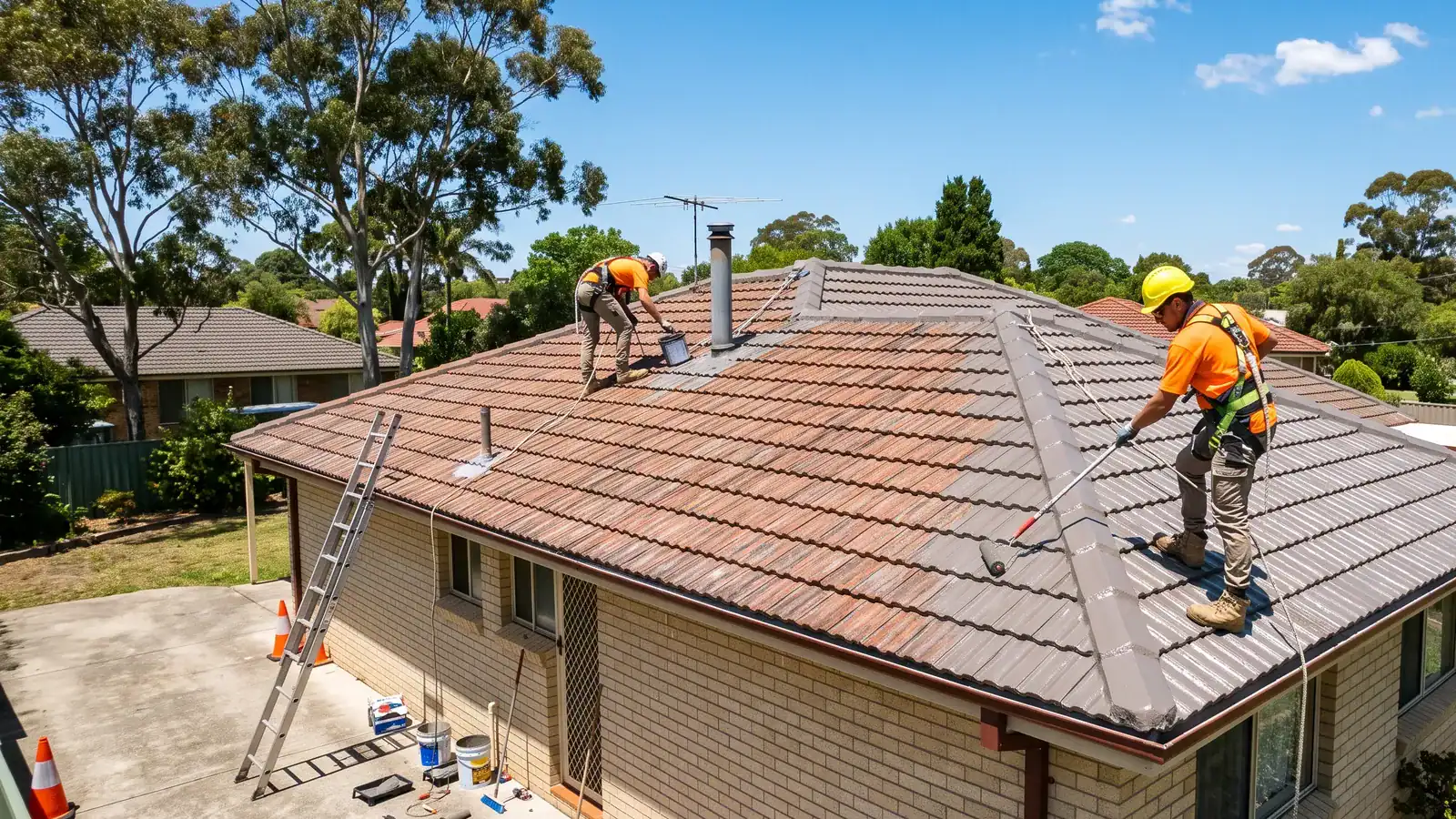
A metal roof restoration for sound but weathered sheets combines preparation, repairs and a suitable coating system. Understanding what a full roof restoration involves helps you compare its scope with repainting alone.
A leak around a flashing or damage to one section may call for targeted metal roof repairs. Homeowners arranging roof repairs on the Central Coast can ask for an assessment of the surrounding sheets as well as the visible fault.
Not sure which path fits? The guide to when a roof needs full replacement versus a repair explains the warning signs.
What it costs
The price of Colorbond roofing depends on the whole job, not just a sheet price per square metre. A supply-only price leaves out removal, labour and the work needed underneath the covering.
- Roof area, pitch and the number of hips, valleys and penetrations
- Access, height and edge protection
- Removal and disposal of the old covering
- Frame or batten repairs found during inspection
- Profile, coating grade, flashings and insulation
- Whether gutters, downpipes and GST are included
Ask for replacement, restoration and repair options to be priced separately where each is viable. For an isolated leak, an assessment for roof repairs to the damaged area can establish whether the surrounding sheets can stay.
| Price you are comparing | What to check before using it |
|---|---|
| Supply-only sheets | Does the figure exclude installation, delivery, flashings and removal of the old covering? |
| Installed price per square metre | Is it based on measured roof area, and does it include insulation, edge protection and disposal? |
| Complete reroofing quote | Are GST, agreed structural work and allowances for concealed damage stated in writing? |
Compare written quotes with the same inclusions. A lower total may exclude insulation, disposal or repairs beneath the old roof.
A small repair and a full re-roof have very different scopes, so a generic online range may be a poor guide to your property. Contact All Pro to get a free roofing quote and an accurate price based on an inspection.
Choosing a licensed roofer
Check the licence before accepting the quote. Service NSW provides a contractor licence checking service so you can confirm the holder and relevant work categories.
- Ask who will carry out and supervise the work.
- Check licensing, insurance and the written scope.
- Ask which product and workmanship warranties apply.
- For recoating, ask about preparation and the specified paint system, such as Dulux Acratex.
All Pro Roof Restoration is owner-operated by David, who has more than 30 years of experience and has run the business since 2005. The business lists NSW Fair Trading licence 178790c and is Dulux Accredited.
The team provides roof restoration in Newcastle and roof restoration on the Central Coast, and works across Lake Macquarie, the Hunter Valley and Port Stephens.
If your roof is due for attention, contact All Pro for a free quote. You can also call 0406 620 352 to discuss an inspection.
Colorbond roofing FAQ
Use these answers to prepare questions for your roofer. Product selection and warranty terms need to match the individual property.
How long does a Colorbond roof last?
There is no single lifespan that applies to every roof. Exposure, installation, coating condition and maintenance affect its service life, and a product warranty should not be read as a promised replacement date.
Is Colorbond suitable for coastal homes near the ocean?
Yes, provided the grade suits the exposure. BlueScope’s coastal selection guide above distinguishes breaking surf from other marine conditions, so have the address assessed rather than relying on a general distance-to-ocean rule.
Can I install Colorbond over my existing tiles?
For a tile-to-metal replacement, plan for the tiles to be removed and the supports inspected. Ask your roofer to document the new batten, fixing and insulation arrangement rather than simply covering the old roof.
What warranty comes with Colorbond roofing?
BlueScope product warranties depend on the product and its application. Ask for the terms applicable to your address, including exclusions and maintenance requirements, plus a separate written workmanship warranty from the installer.
BlueScope’s warranty guidance explains that an eligible pre-approved warranty needs to be activated using its unique code. Ask who will arrange the application and activation, and keep the purchase and handover documents.
Does Colorbond reduce heat inside the house?
Thermatech helps reduce solar heat absorption at the roof surface. As BlueScope explains in its thermal guidance above, the effect inside the home also depends on colour, roof design and insulation.
Care, repairs and insulation
Can a Colorbond roof be repainted?
Yes, if the sheets are suitable for recoating after assessment and preparation. Colorbond roof repairs and recoating address different faults, so leaking joints and corrosion need attention before painting.
How does Colorbond perform in hailstorms?
Hail can dent steel sheeting, but dents alone do not tell you whether the roof is still watertight. BlueScope’s hail guidance identifies water ponding in significant dents and deformed sheet overlaps as potential problems, especially on low-pitched roofs.
Knowing what to do after hail damages your roof helps you arrange an inspection and document the damage.
How often does a Colorbond roof need maintenance?
Follow BlueScope’s maintenance instructions for the product and exposure, with extra attention to surfaces sheltered from rain. Before arranging a professional roof pressure cleaning service, have the contractor confirm a method suitable for your coating.
What is the difference between Colorbond and Colorbond Ultra?
Ultra provides additional corrosion protection for more demanding exposure. Selection should follow BlueScope’s site guidance, including local marine conditions, rather than assuming every coastal home needs the same grade.
Do you need insulation under a Colorbond roof?
Insulation should be considered as part of the complete roof design. Bradford’s Anticon roofing insulation guidance explains how a suitable blanket beneath metal sheets helps manage heat, rain noise and condensation.
Sarking and bulk insulation have different roles, and adding a membrane alone does not provide the same performance as an insulated roof system. Ask the roofer to specify the layers and ventilation appropriate to your home and applicable building requirements.